
















































































Growing up in Seoul, South Korea, Angie Kim lived a quiet and seemingly happy life. As an only child, Kim lived in a one-room apartment with her parents that had no running water and no electricity. And though many, including her aunt, told Kim that she lived a miserable life, Kim didn’t feel that way.
“I didn’t feel miserable. That was just life, that’s what I knew. That was my baseline,” Kim said.
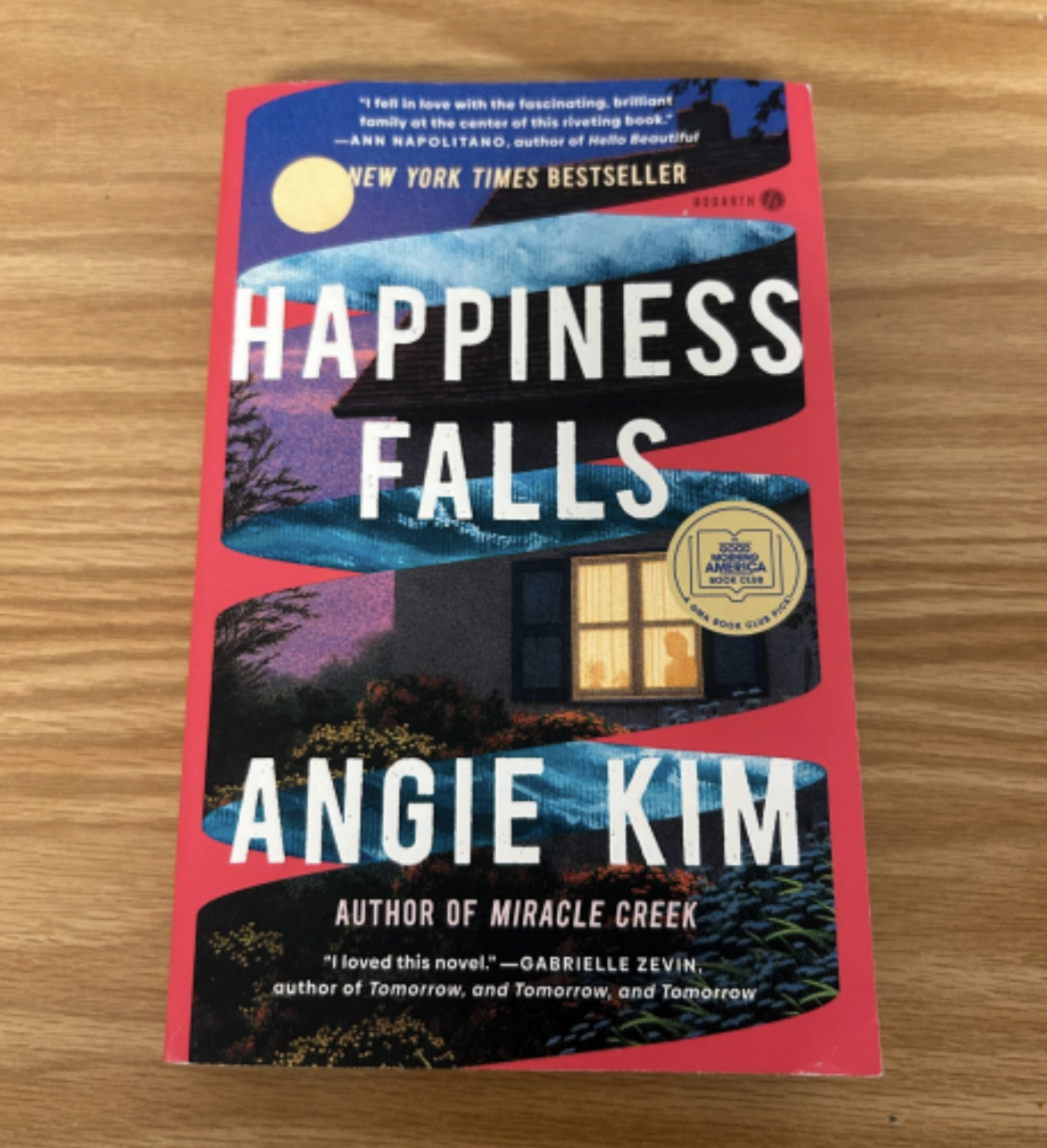
When the Kims managed to obtain a family visa, permitting them entry into the U.S., she was then told by these same family members that she had won the lottery. However, once she arrived in America, Kim found her inability to communicate with others to be a very isolating experience as she felt disconnected from the new world that she had been transplanted into. Kim began to question her old, ‘miserable’ life and came to the realization that there is no such thing as objective happiness. Thus, the key theme of Loyola’s 2025 Common Text, ‘Happiness Falls,’ was born.
Kim started thinking about a book like ‘Happiness Falls’ as early as 2018, though her original conception of the book was far different than the end result. Initially, Kim wanted to depict a quirky family and their attempts to conduct happiness experiments to help their father realize his lifelong dream of publishing a book about happiness with a non-verbal autistic child.
However, soon after she began conceptualizing this book, a revelatory experience changed her idea of neurodivergence, and with it, the novel as a whole. After consulting friends with non-verbal children and asking them how they were able to incorporate their children into conversation, Kim quickly came to a realization.
“Being unable to speak does not mean nonverbal. One of my friend’s children had picked up reading, was taking classes and writing essays. This boy that I remembered, who I knew had been diagnosed with an IQ of 50, could use words to communicate. I wanted to bring the reader through the same revelatory experience that I had,” Kim said.
After this epiphany, Kim knew that her novel could no longer be a cute family story. She wanted this desperation to communicate with someone previously thought of as incapable to drive her text. In order to better understand how one could communicate nonverbally, Kim began researching, meeting more people like her friend’s child, and even taught a class with nonverbal, autistic participants. The more she dove into this world, the more her obsession was questioned.
Why was Kim so obsessed with telling this story in particular?
“I realized that all of this stuff that I had gone through as an immigrant in Baltimore had just kind of come out. That experience that I had gone through, being unable to communicate with those around me, was incredibly difficult. It was so painful to lose this self-competence overnight, and I only went through that for two years. So I asked myself: what is it like to be somebody going through this their entire lives? I just decided that I had to write about it,” Kim said.