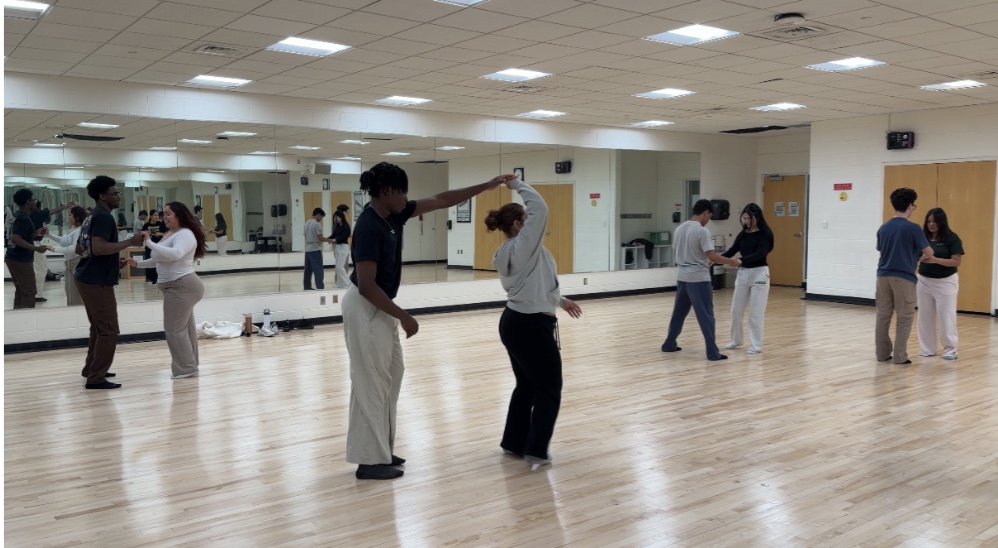








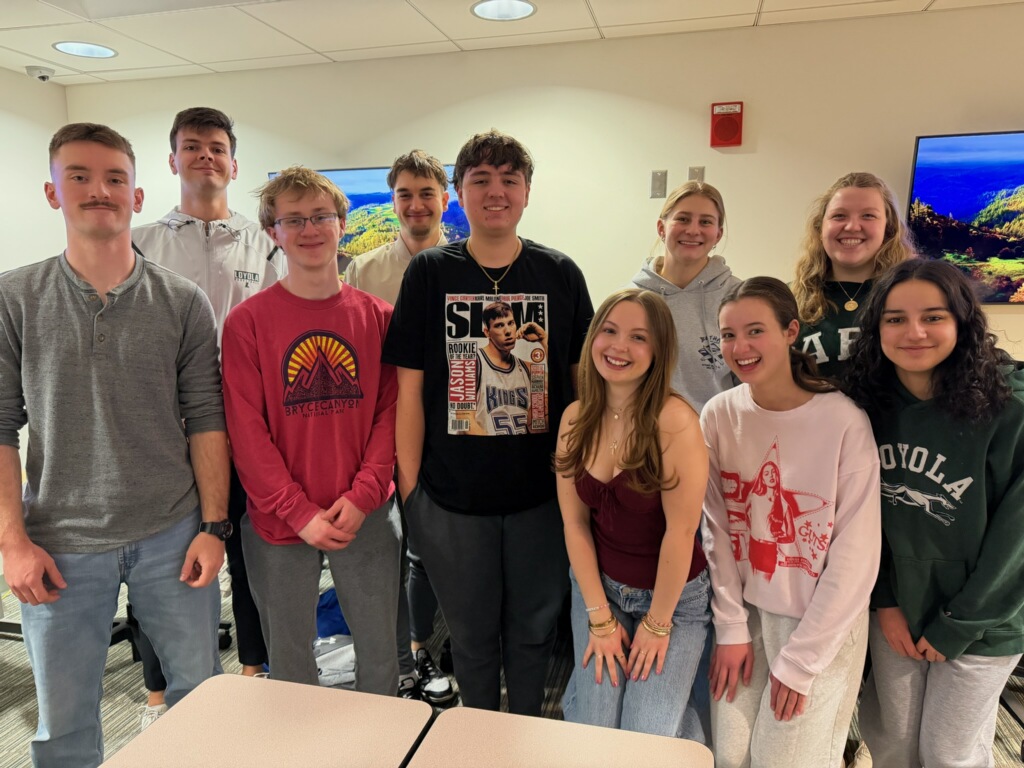













































On Wednesday nights, music fills the Fitness and Aquatic Center (FAC) studio with the sounds of salsa, bachata, and merengue. What started off as a student’s idea has turned into Loyola’s newest space for connection and celebration, filling a gap for Latin music and community on campus.
The new Latin Dance Club was founded by Emily Luna ‘29. She feels strongly that it is needed right now. According to the FBI, and as reported by Axios, crimes targeting Latinos hit an all-time high in 2025. The FBI reported that anti-Latino hate crimes spiked 18%, going from 858 incidents in 2024 to 1,014 in 2025.
Katie Wong ‘28, a political science student whose parents immigrated from Peru, sees the formation of the Latin Dance Club as part of a larger, serious conversation about Latin belonging.
“In today’s political climate, there’s just so much tension surrounding anything of diversity, especially immigration. Spaces like this matter on campuses to give people a way to celebrate their culture without having to justify or defend it,” Wong said.
In Maryland, Attorney General Anthony Brown has filed a lawsuit to stop the federal government from converting an 825,000-square-foot warehouse in Washington County into an Immigration and Customs Enforcement (ICE) detention facility. Meanwhile, plans for two other facilities are in court.
According to Maryland Matters, over 3,300 Marylanders were detained by ICE in 2025, which is more than double the number in the year prior. Over half of 2025’s detainees were facing no criminal charges.
Across the state, other facilities also face challenges. In Baltimore County, the Amica Center for Human Rights reports that a federal court recently intervened to end ‘inhumane’ and ‘cage-like’ conditions in city holding rooms. In Western Maryland, DC News Now reports that a federal judge has recently taken a stand against construction for a new detention facility.
As these legal battles play out in court, the emotional toll they leave on students of Latino and Hispanic descent is immediate.
“It makes the politics of it all feel very personal … In a time where our culture feels suppressed, I’m excited to see what the Latin Dance Club can create,” Wong said.
Luna knew early on upon arriving at Loyola that she wanted to build something lasting. She wasted no time waiting to get involved and jumped straight into leadership.
“I think I decided to just start now so I could have the time to build up the club. I wanted to gather the Latin community and do something that most of us sometimes can’t do around here, like Latin dancing, specifically,” Luna said.
Luna said she participated in a similar club during her high school experience. With her background as the daughter of Peruvian immigrants, it was instilled in her that dance means more than just movement.
“We just love dancing, honestly. And I know people want to learn, but they don’t know where to go, and classes are so expensive. So teaching it for free, in a club, is something I enjoy doing,” Luna said.
Individuals are partnered up with other participants and rotate multiple times to get to know each other and experience feeling comfortable with the movements with other partners.
At a recent meeting, participants practiced their bachata dance moves, a style of dance that originates in the Dominican Republic and incorporates partner work focusing on lower body movements.
“If you want to join the club, you do not need any experience at all. You can come just to learn for fun. We teach everything from basic to fundamentals to technique,” Luna said.
Dr. Cynthia Fraga, a Spanish professor at Loyola from Argentina and the club’s moderator, says the club’s accessibility and inclusivity contribute to its overall impact.
“I think it’s a safe, respectful space to learn how to dance and appreciate music. Music is a big part of how we connect with our culture … and we can’t help it: when we listen, our body starts moving,” Fraga said.
Fraga also emphasized the significance of stepping outside of your comfort zone in college.
“You have to be comfortable being uncomfortable. Joining clubs that are outside of your comfort zone … being vulnerable because you’re not the best dancer in the room, that’s a good life lesson,” Fraga said.
Beyond personal growth, students attest to the club arriving at a time when cultural spaces are imperative for a sense of belonging and sense of safety.
Looking ahead, Luna hopes for the club to expand and to participate in competition with other schools.
“There’s a whole East Coast festival here in Baltimore. I want us to showcase what we’ve built,” Luna said.
For now, though, the focus for the club remains their weekly meetings, collaborations with other ALAS initiatives on campus, and always spreading the importance of movement in Latin culture.