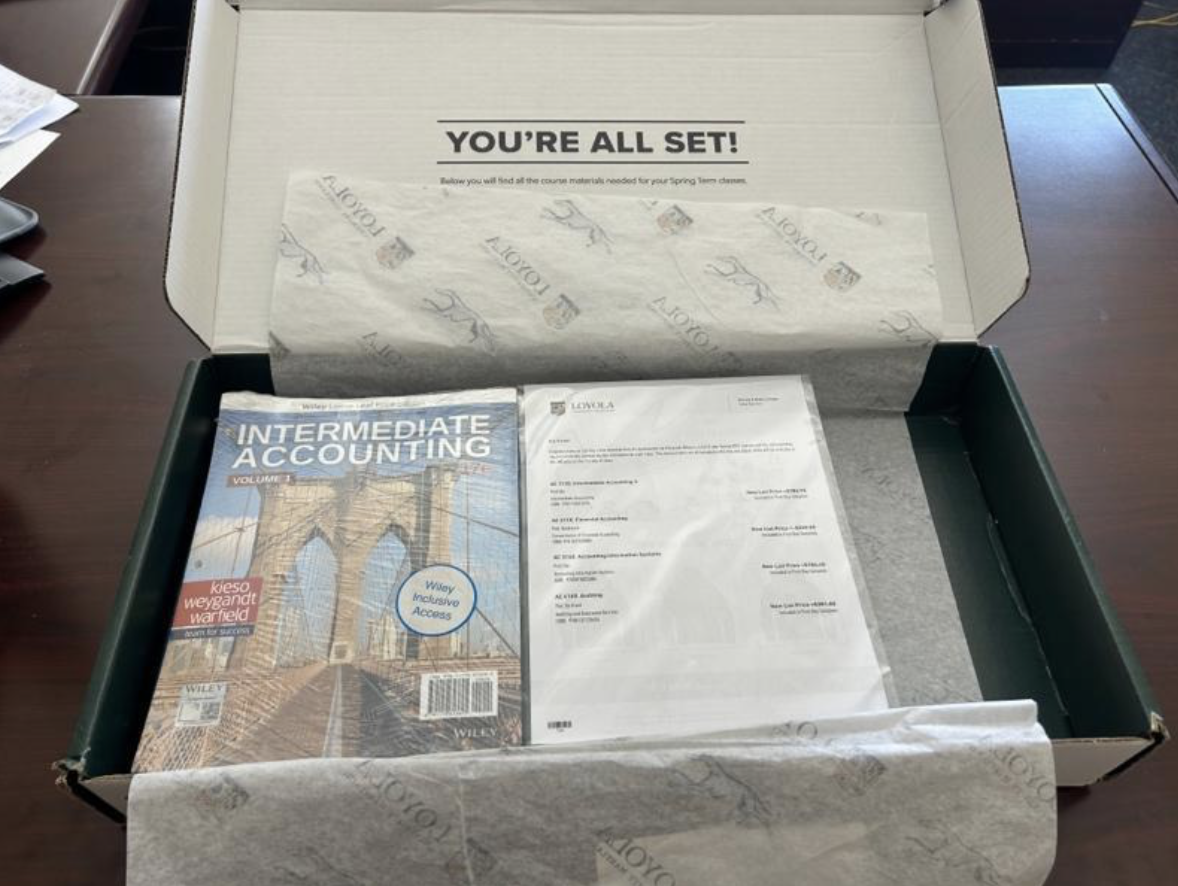























































During the 2024-25 school year, Loyola announced that, starting in the Fall of 2026, textbook costs will be included in each student’s tuition and financial aid packages, allowing students to receive aid for course materials that were previously paid for out of pocket. The school will be adopting Barnes & Noble’s First Day Complete Program, which will provide students with their required textbooks and course materials by the first day of classes. Now, as the fall semester approaches, Loyola administrators say they are working to make sure the program runs smoothly and that students understand how it will work.
Under the new system, students will pick up their automatically-ordered textbook packages from the bookstore, including physical copies or digital access codes, rather than purchasing them separately at the start of the semester. The school says that this will help reduce the financial strain associated with purchasing course materials and ensure that no student falls behind because they do not have the money to afford them.
Vice President for Auxiliary Operations Michael Mansfield said the university has created a working group to oversee the program, including representatives from Academic Affairs and the Office of the Registrar. Faculty submission deadlines for course materials play a key role in ensuring books are ready before classes begin. Once students register for classes, the bookstore will use enrollment data from the Office of the Registrar to build individualized textbook packages.
“We work with the Office of the Registrar because they manage the database that has your academic record in it. We need that information to notify the bookstore so that they’re aware of what classes you’re in,” Mansfield said.
Physical textbooks will be distributed through the bookstore, while digital materials will be delivered through email or Moodle via access codes. If students add or drop classes during the add/drop period, their materials will be adjusted accordingly.
Mansfield explained that the university has built textbook costs directly into its budgeting structure rather than treating them as an additional expense for students.
“Each year during the budget process, we have revenue earned from all of our sources: tuition, housing, meal plans, and we have expenses. What we did for next year in our budget pro forma, which is kind of like your trial budget, is that we built this new expense because there’s a cost to the university for providing books,” Mansfield said.
Bulk purchasing helps reduce costs, allowing the university to negotiate lower per-student rates.
“We’re paying a really low rate per course for each student to get their books for free. What we’ve done is we’ve built the expense into our budget, and then we’ve offset it by the revenues that we’re receiving,” Mansfield said.
Vice President for Finance and Administration Kristy Michel said the change was a restructuring of how students already pay for required materials.
“The cost will be rolled into the tuition price Whereas before you paid tuition and then came and paid for your books separately, it will all be rolled into that tuition price,” Michel said.
She pointed to past challenges where some students delayed purchasing textbooks due to cost, which affected academic preparation.
“Looking at it from an academic perspective, there were students who didn’t buy the book up front. They got halfway through the semester or towards the end of the semester and didn’t have their textbooks, and that wasn’t great in terms of preparing for classes and finals,” Michel said.
Vice President for Enrollment Engagement Eric Nichols said textbook expenses have long been one of the most common reasons students sought assistance from the Student Success Emergency Fund.
“The biggest use of the fund was textbooks,” Nichols said.
In February, a student-made petition was posted on Change.org, urging Loyola to reconsider this new textbook program. This was caused by students worrying that their tuition will increase by the amount their necessary textbooks cost. However, the administration has made it clear that this program will not be the cause of such an increase. Currently, tuition already covers access to services like the Fitness & Aquatics Center, laundry facilities, and other campus resources. With this change, textbooks will simply be added to that list of services included as part of tuition that funds the institution’s operating costs.
“In that petition there was an argument about how students should have the flexibility to pay for books separately. But that flexibility, it only tends to benefit students that have the financial capacity to do that,” Nichols said.
The program ensures students begin each semester with equal access to materials.
“That’s literally what these programs do. What could be more equitable than making sure every student, regardless of their financial capacity, has access to all their textbook materials on the first day of class,” Nichols said.
Vice President for Student Development Deborah Cady Melzer said the Student Success Emergency Fund will continue, but its focus will shift now that textbooks are covered through tuition.
“The Student Success Fund will continue to help support other emergency needs for students such as housing and food insecurity, laptops, winter clothes, emergency travel, etc.,” Melzer said.
The program will also include supply packs for introductory fine arts classes, though more expensive items such as cameras and lab equipment will not be covered. Students can still seek assistance for those costs through the Student Success Fund.
While a Loyola-specific name for the program is still being finalized, administrators say most of the logistical planning is already in place. The focus now is on communication and preparing students ahead of the Fall rollout. The goal is simple: ensure students have their materials on day one without added steps or financial stress.