



































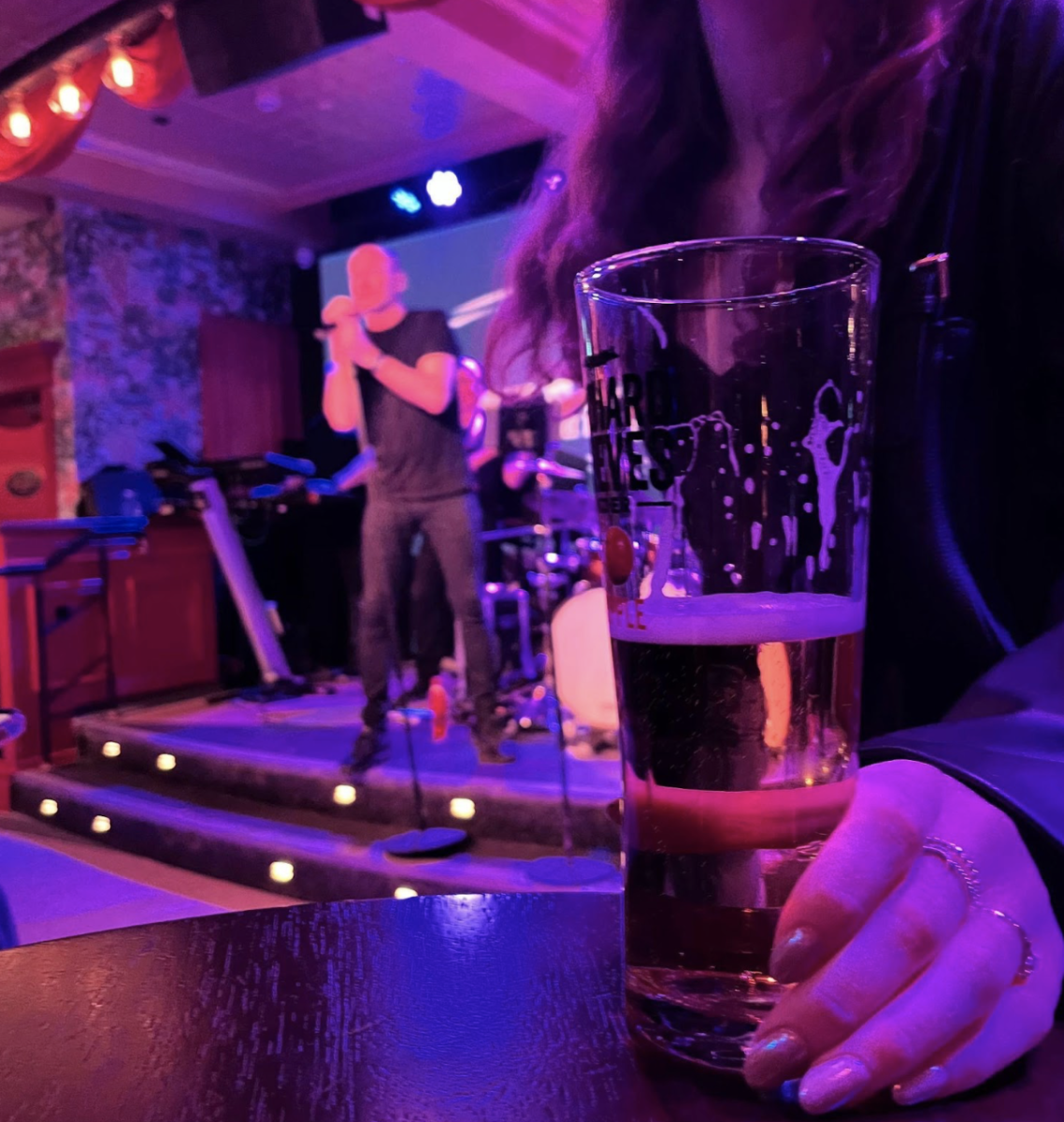







A Saturday night at a campus bar hums with music, flashing lights, and crowded tables of half-finished drinks. For most students, it’s a normal weekend, until it isn’t. In just seconds, a drink can be tampered with, turning a night of fun into something far more dangerous.
Drink spiking, sometimes called drink roofieing occurs when someone adds drugs to a beverage without a person’s knowledge or consent. The drugging can lead to a variety of symptoms and could be done with intent to harm, sexually assault, or incapacitate someone.
According to Alcohol.org, among a survey of 969 people, 56% of women and 44% of men reported unknowingly consuming spiked drinks or food, and 37% respondents said it happened multiple times. Over half of these spiking incidents reportedly took place while respondents were in college. The Rape, Abuse & Incest National Network (RAINN) reports that among U.S. college students, 11% of women and 3% of men say they have experienced sexual assault while incapacitated by drugs or alcohol since entering college.
Baltimore City Detective Daisha Simms, within the Special Investigation Sex Crimes Unit, said they have only seen a few reports of Drug-Facilitated Sexual Assault.
“Things like that do go underreported. A lot of people or victims of sexual assault don’t feel like they’ll ever get justice. Within BPD Sex Crimes Unit, we’ve only seen a handful of reports like this. And for me, they mainly come in around the beginning of the college semesters,” Simms said.
How Does Drink Spiking Happen?
Director of Forensic Nursing at Mercy Medical Center Debora Holbrook said a variety of drugs can be used in drink spiking and drug facilitated sexual assault. Many of these drugs are odorless, tasteless, and colorless, making them nearly impossible to detect.
According to Holbrook, drugs like Rohypnol, Ketamine, gamma-hydroxybutyrate (GHB), and ‘club drugs’ like Ecstacy could be used for drink spiking and assault. In some cases, the overconsumption of alcohol, encouraged or orchestrated by another person, can lead to drug facilitated sexual assault.
Holbrook describes many of the drugs as having an amnesic effect and explains that they can be given stealthily. She also said that mixtures known as medicine cabinet cocktails, which can leave a person incapacitated, are becoming more common.
“Drugs like Benadryl and, say, a seizure medicine that somebody’s sister uses. Mix them together, and they cause somebody to fall asleep,” Holbrook said.
How Can Students Protect Themselves?
Holbrook said the most important step in staying safe is to watch your drink being poured and watch who you surround yourself with.
“You go as a group, you stay as a group, you watch your friends, you watch yourself,” Holbrrok said.
Unfortunately, she added, tactics for spiking are becoming increasingly difficult to catch.
“There is very little you can do to protect yourself. People come up to your table, and they’re squirting it from underneath the sleeve of their shirt with a syringe or a vixen bottle. And you’re looking at their face. You’re not watching what their hand is doing,” Holbrook said.
Holbrook said to keep your guard up and to watch out for strangers coming up to tables and bars, even if the person is an acquaintance.
“It’s really hard when you’re in bars, and people are friends of friends, and they’re saying, ‘Hey I know you from school!’” Holbrook said.
Employees at local bars said they also play a role in preventing drink tampering.
VIP Bottle Server at Baltimore college bar PowerPlant Live! Ryleigh Pollock explained the steps employees take to help prevent drink tampering.
“We’re trained to be vigilant and aware of our surroundings … If we suspect that a drink has been spiked or that someone might be spiking drinks, we immediately alert our manager and security,” Pollock said.
Other safeguards for preventing drink spiking include cloth drink covers, testing strips, and even color-changing nail polish. Confidential Advocate and Director of the McAuley Women’s Center Melissa Lees explained that although these items can be helpful, students should not rely on them fully. Sometimes, she said, they can even provide a false sense of security.
“The nail polish and drink covers can be helpful, but I think it’s in combination with knowing who you’re with, seeing who hands you your drink, and not leaving your drink unattended,” Lees said.
Holbrook also agreed that drink covers should not be a student’s only safety net.
“If you want to put a drink cover on it, go for it. But it does not eliminate the need to be watching constantly what’s happening with your food and drinks,” Holbrook said.
Campus Educational Efforts
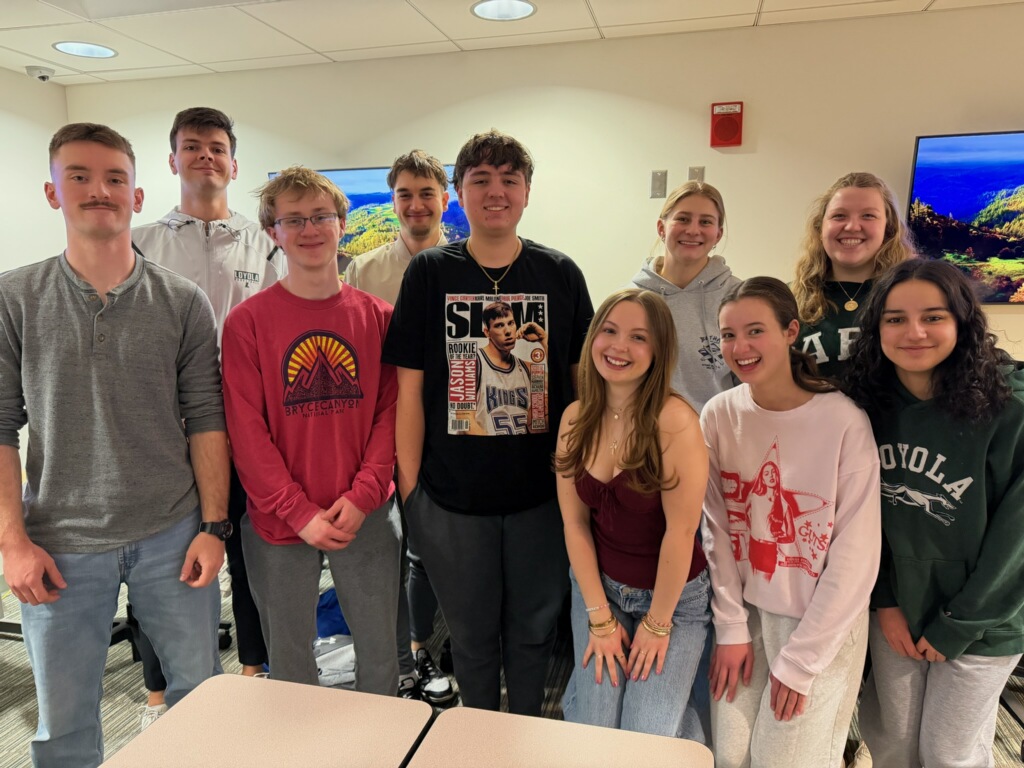
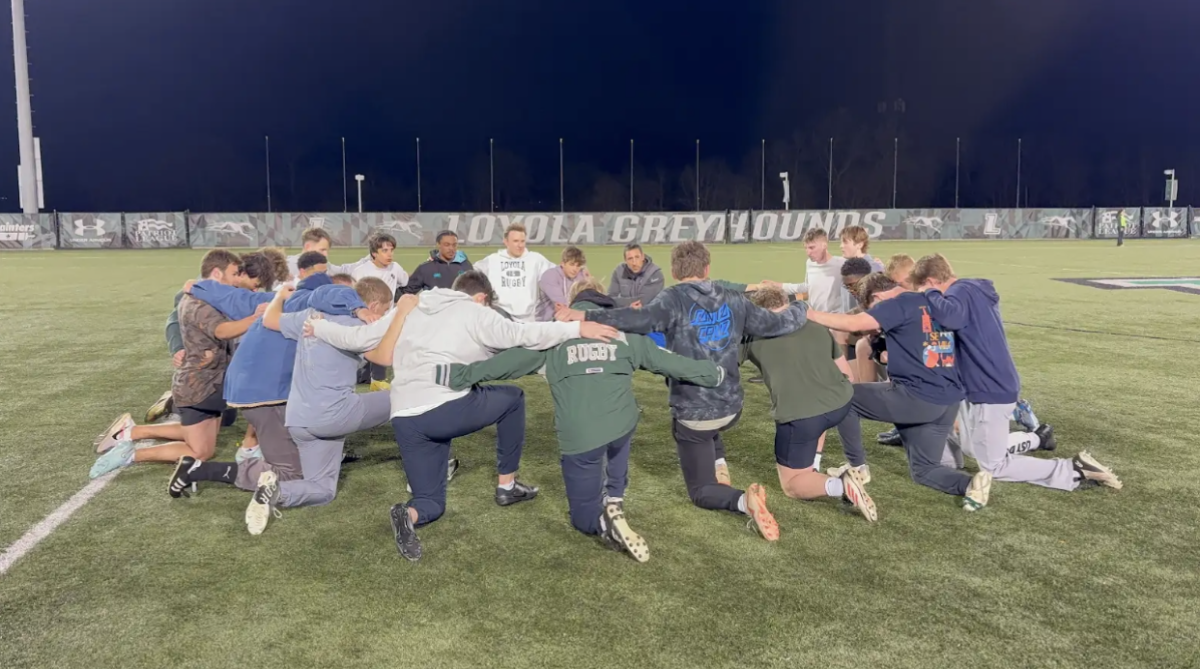
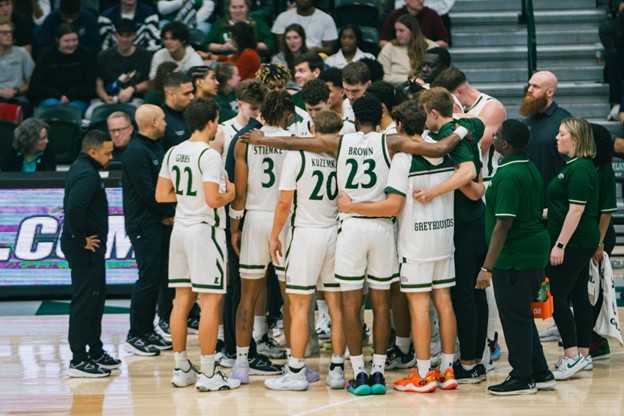
Sip Safe Greyhounds, a student run organization that was founded in spring 2025, works to educate students on drink spiking and provides free drink covers for students.
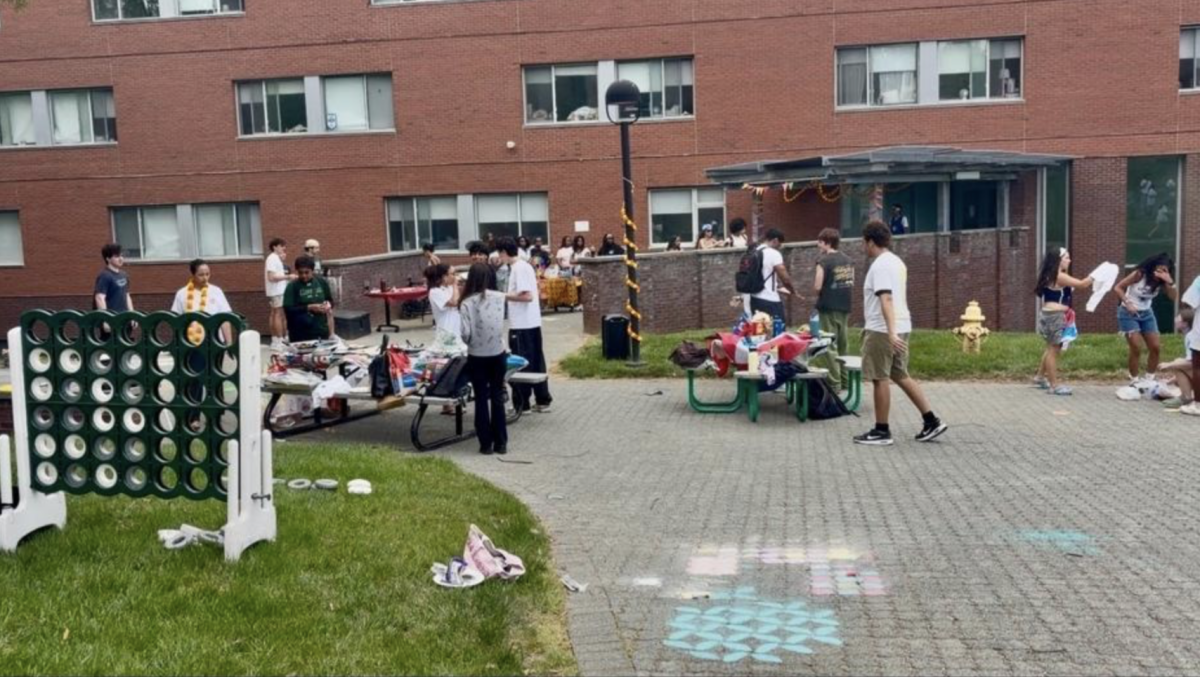
Emma Hester ‘26, Vice President of Sip Safe Greyhounds, said the club had a lot of successful feedback from students and even prospective families during tabling events.
“Every student that comes up to us is like, ‘Wow this is so cool,’ which I honestly was surprised by. Even prospective families. I remember one time last semester we were tabling, and there were students that were on a tour. They were just walking around with their parents afterwards. The parents came up to us and were like, ‘This is actually really awesome,’” Hester said.
Hester stated that by having honest conversations around drink spiking, more students will feel comfortable with the subject and learn how to navigate it. Although Hester acknowledged that drink covers are not fullproof, she said they can act as a good first step in protecting yourself.
“There’s always risks, regardless of what type of protection you take. Having those on there can’t hurt. Having that on there is just another layer of protection. It’s also really important that you’re vigilant and watching your drink,” Hester said.
Responding to a Suspected Spiking
If someone suspects their drink has been tampered with, it is important to get to a safe place, tell a trusted friend, alert security, and seek medical attention immediately.
Holbrook said that if someone believes they have been sexually assaulted, GBMC offers free forensic exams, and survivors can choose whether or not to report to law enforcement.
“No matter what they need, we can help guide them to safety if they feel like they’re not safe. Justice is different for everybody,” Holbrook said.
Whether it’s friends watching out for one another, staff responding quickly to suspicious behavior, or students educating their peers, preventing drink spiking is a community effort, one that depends on awareness, action, and looking out for one another.