














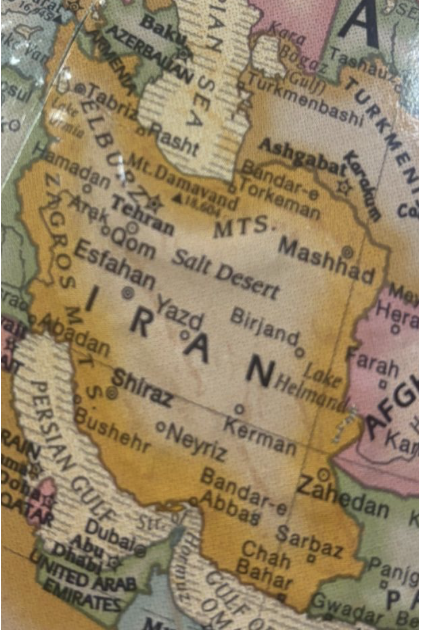






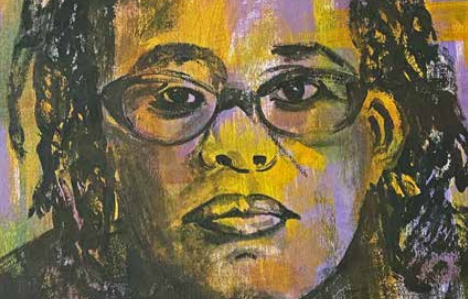












Jina Mahsa Amini was killed in 2022 by Iran’s morality police for not adhering to the regime’s strict dress code. This brutal and unjust death resulted in a shockwave of people protesting in the streets of Iran, demonstrating the strength Iranian women have always possessed.
People all over the world were shouting and chanting ‘Women, Life, Freedom’ in protest of Iran’s morality police force, who enforce the behavior of all, and the strict dress code of primarily Islamic women. International news outlets and social media sparked a frenzy of stories and posts following the movement, so much so that the United Nations publicly condemned the regime’s actions following Amini’s death.
Zahra Bahari, an Iranian-American woman, was born in Iran but fled to the United States when she was very young. Bahari explained that after the death of Amini in 2022, the Iranian-led protests created a massive wave in the movement for women in Iran.
“I think that was the pivotal moment that there was a major change in not just women’s rights in Iran, but the way women were interpreting the laws in Iran,” she said.
This movement assumed a rhetoric that Westerners, and the rest of the world, were passionate about women’s rights in Iran. However, ever since the United States and Israel have started military conflict with the Iranian regime, that rhetoric hasn’t seemed to come up nearly as much.
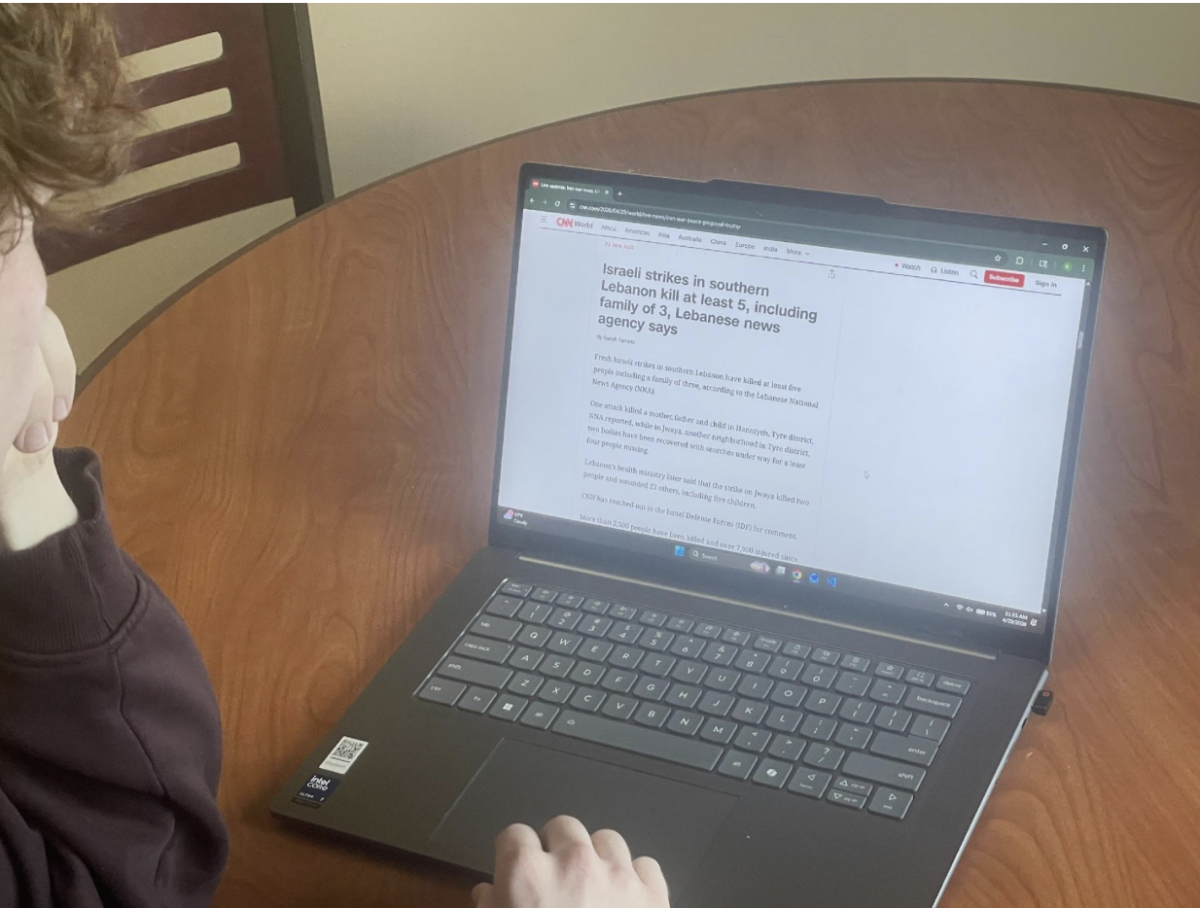
Despite Iranians living through this conflict, their experiences remain relatively absent in terms of media coverage, which is immensely troubling. This concerns many, because war is a time where impacted civilians need their stories spread to help the rest of the world see the human cost of a war.
Bahar Jalali, Assistant Teaching Professor of History at Loyola, said that the reason the media may be focusing on other factors such as the regime and gas prices is because if the focus was on the people, which evokes sympathy, then the war would be a lot less desirable from all sides.
“If the actual people of Iran, the Iranian nation, was more visible to a Western audience, they would see Iran differently, and it would make them really question this war, because the human cost of the war would become a lot more visible,” Jalali said.
Jaliali explains that if media coverage focused on the people of Iran, those in the West would see that they share commonalities with many Iranians. This is important to recognize and might just make us see this war in a different light.
“To focus on the people would be to humanize them. And then I think that would make the war a lot less popular… There’s a reason the media doesn’t focus on the very sophisticated tech savvy young Iranian population, right? Because they do not represent the regime. The regime is not Iran. And that disconnect is very stark,” she said.
Political Science major, Jessica Poolaki ‘28, explained the importance of Iranians getting news representation during this ongoing conflict.
“I think it’s important that the media covers the people rather than just the government, because the government [in Iran] doesn’t represent the people, although it should. …I think that by looking strictly at the government, it creates this really one dimensional story of how the country is and what the people think, whereas having the people, you know, you have more so of their struggles, you can find empathy because you’re thinking about and considering individuals and not just a group of people that might seem hateful. You get to pick apart and see how each individual person thinks,” Poolaki said.
For more updates on this conflict and its human impact, follow along with Iranian journalists like Christiane Amanpour and Masih Alinejad.