
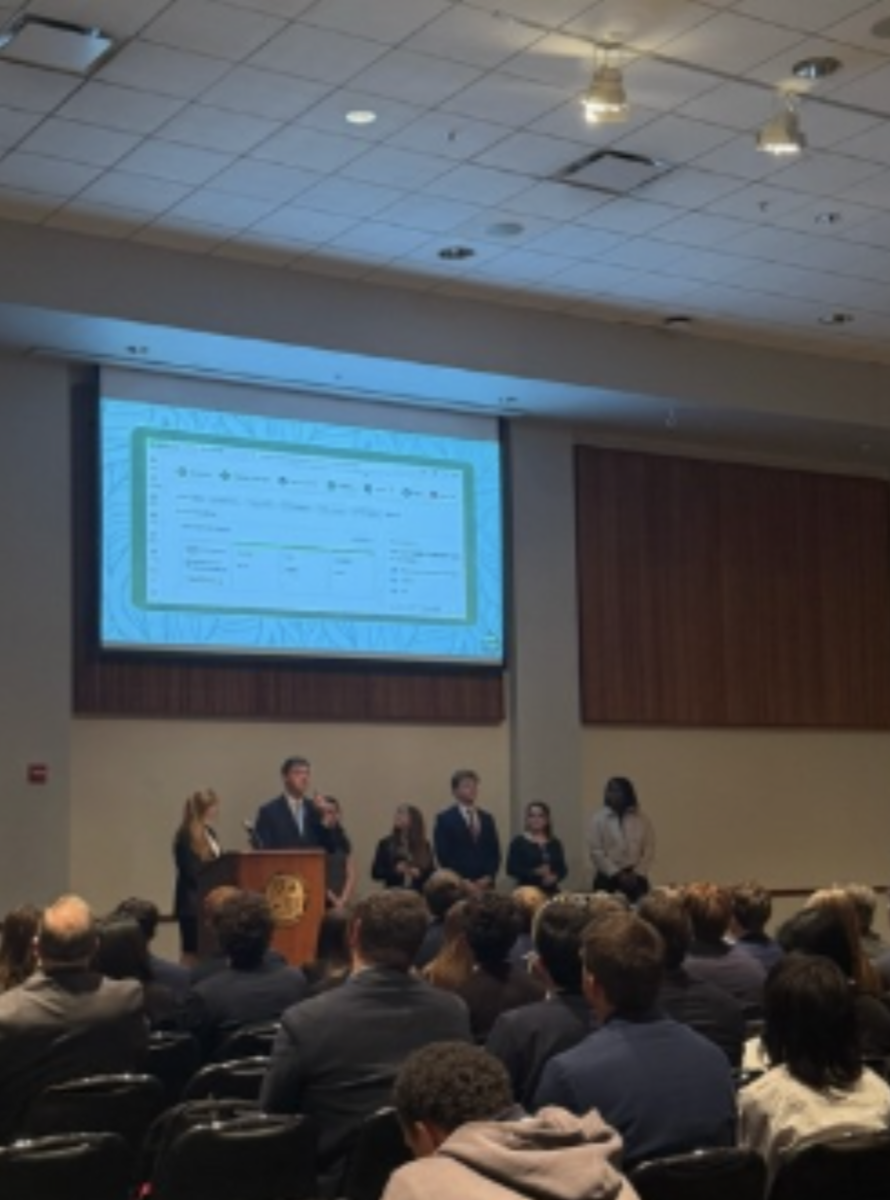




















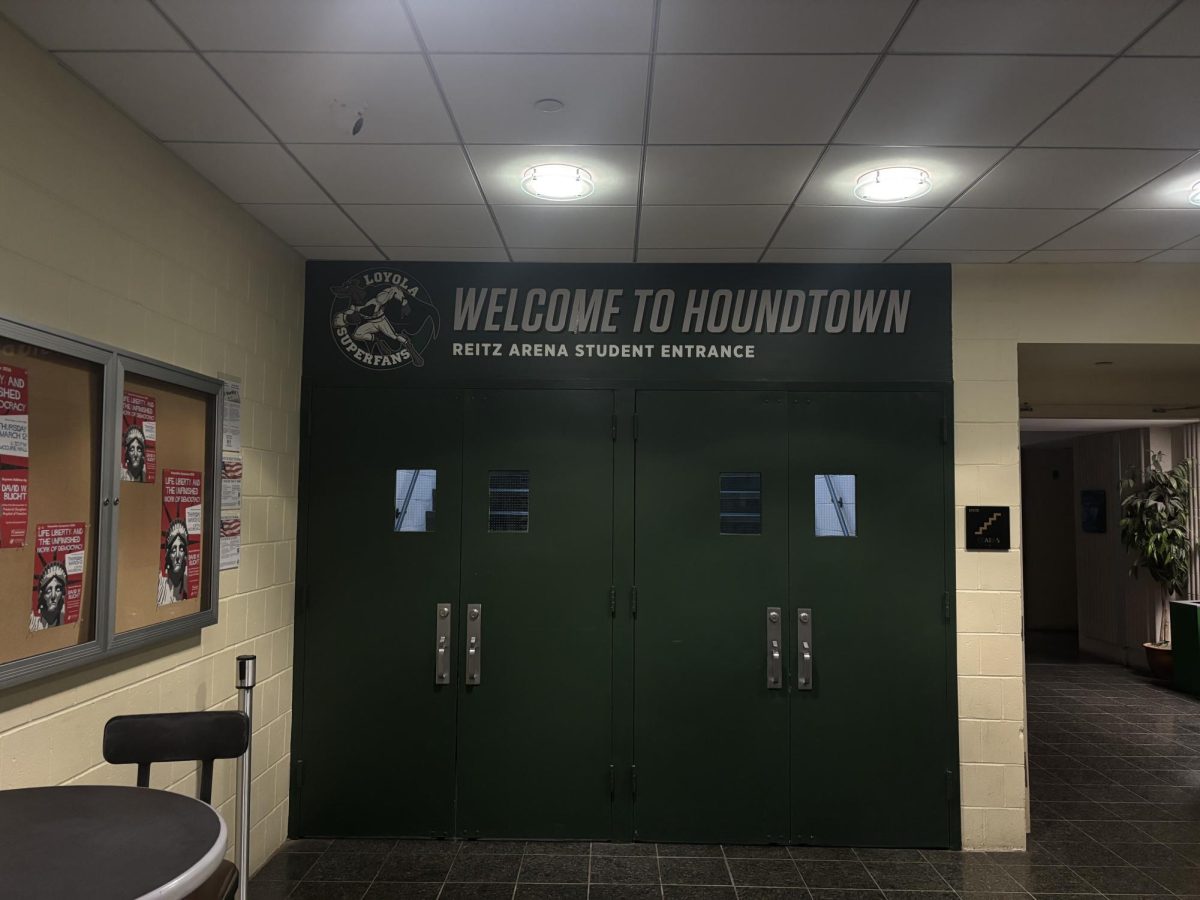










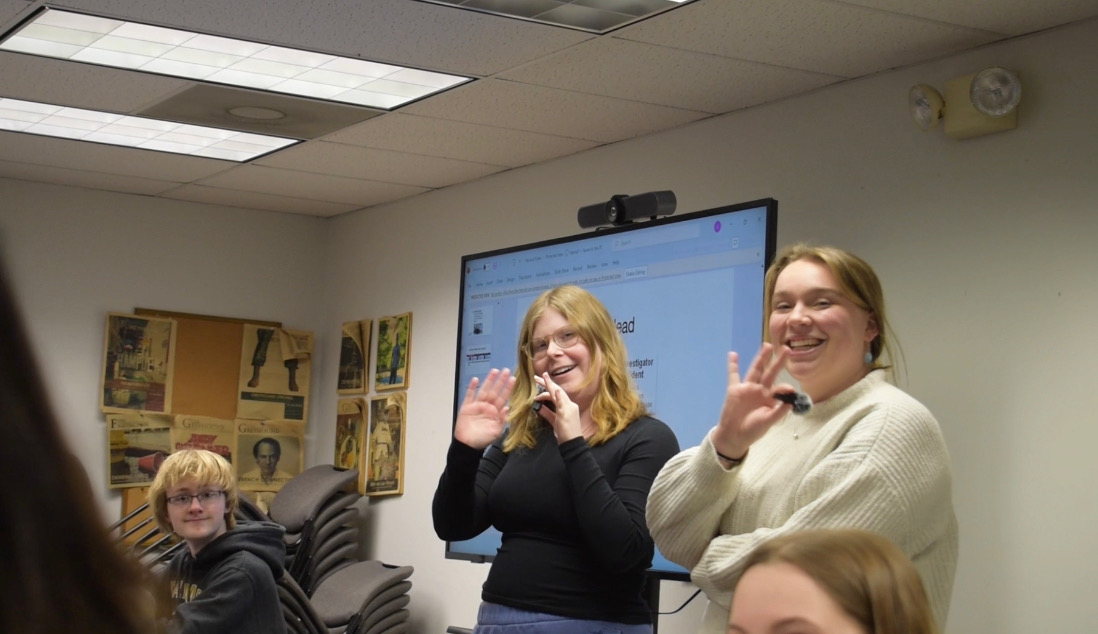
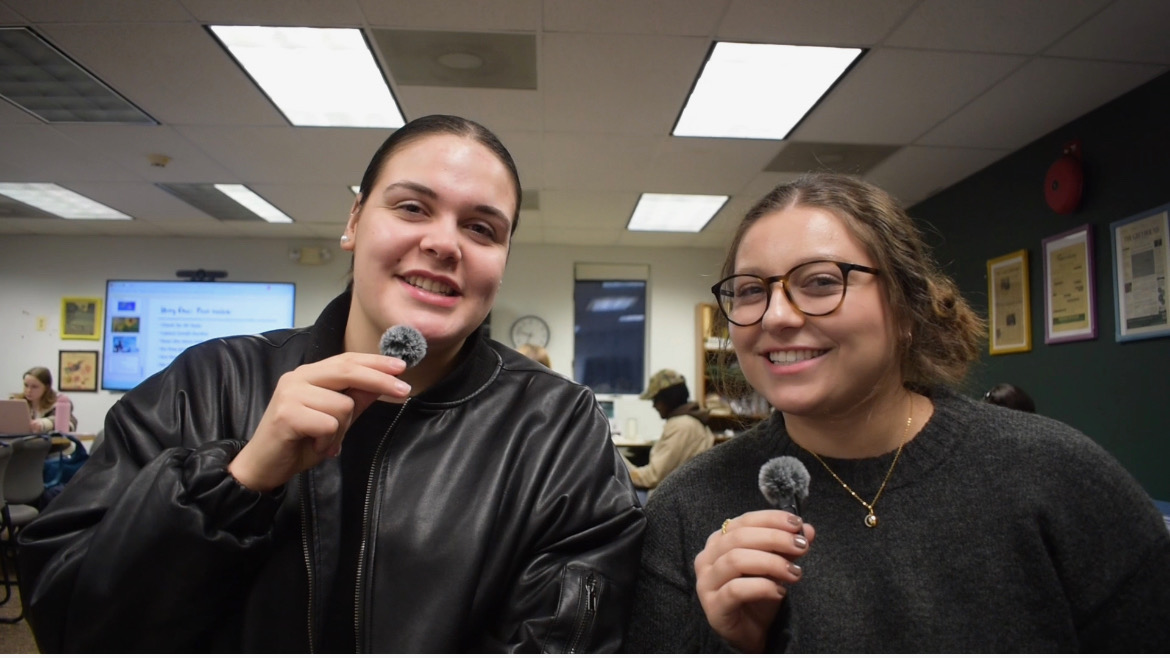









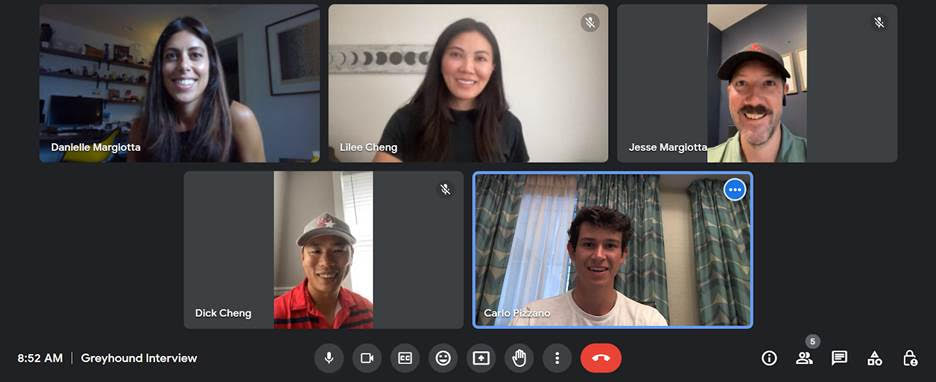
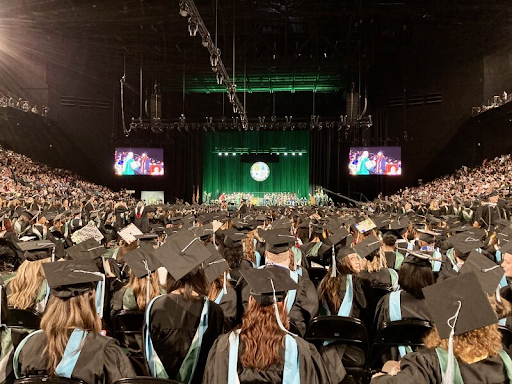

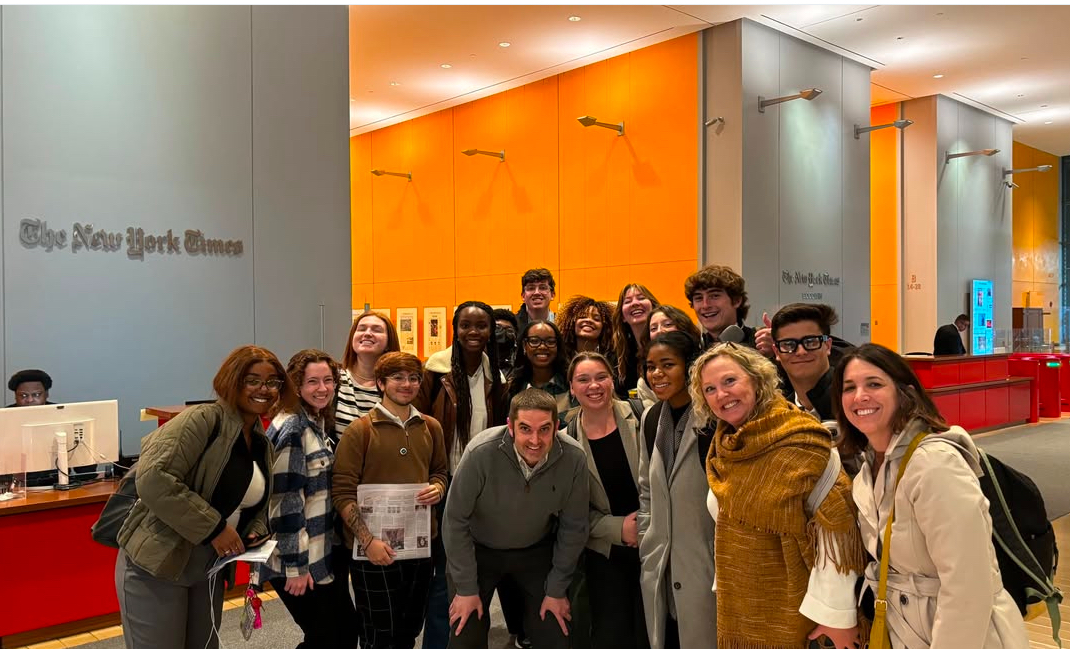














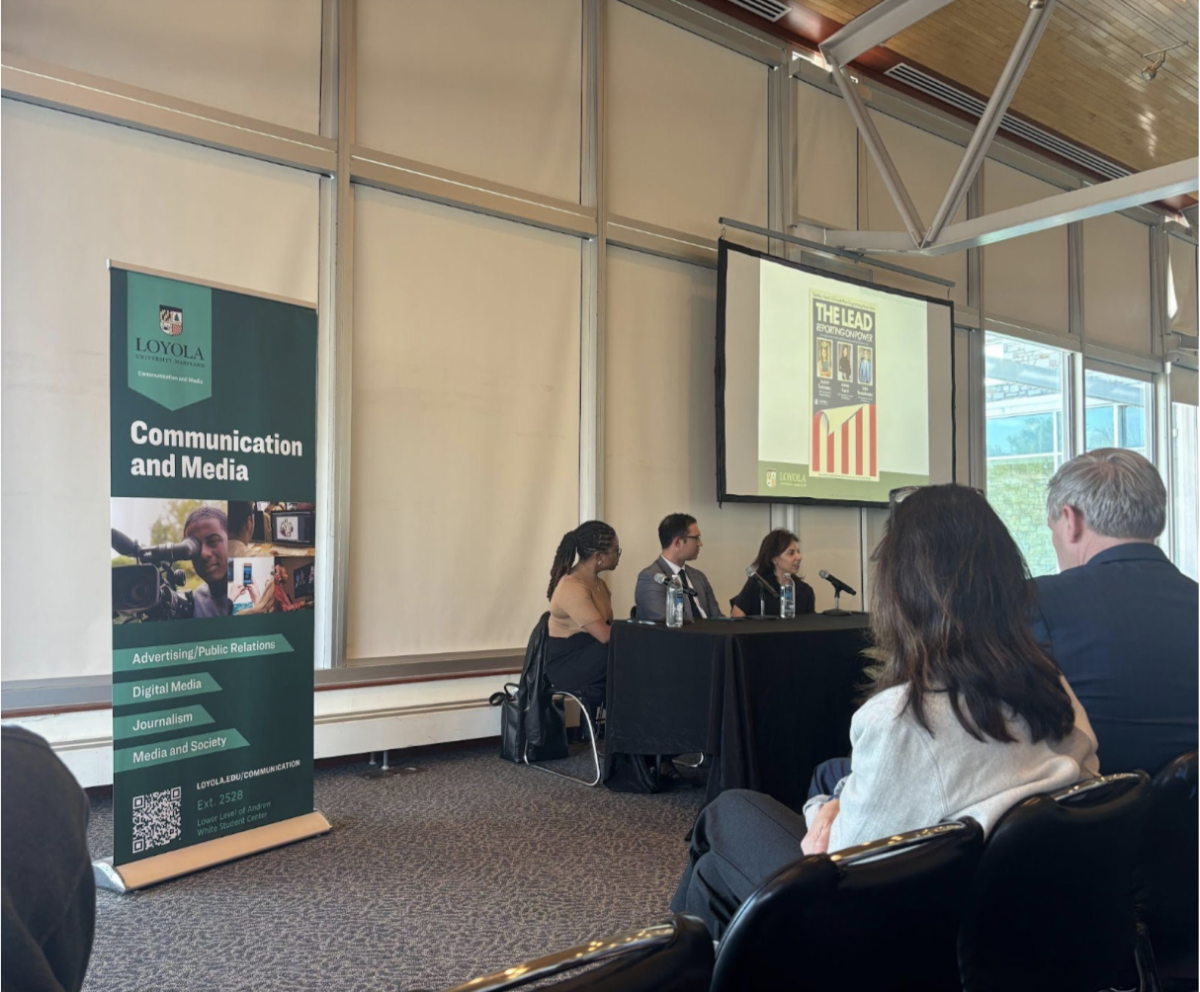
On March 24, the Department of Communication and Media welcomed NPR host Juana Summers and New York Times congressional correspondents and authors Luke Broadwater and Annie Karni for this year’s annual Caulfield Lecture, ‘The Lead: Reporting on Power.’
Longtime New York Times reporters Broadwater and Karni said that despite their many years reporting the news, there has never been a time like today.
“I think we are witnessing probably the most dysfunctional congress in the history of the United States,” Broadwater said.
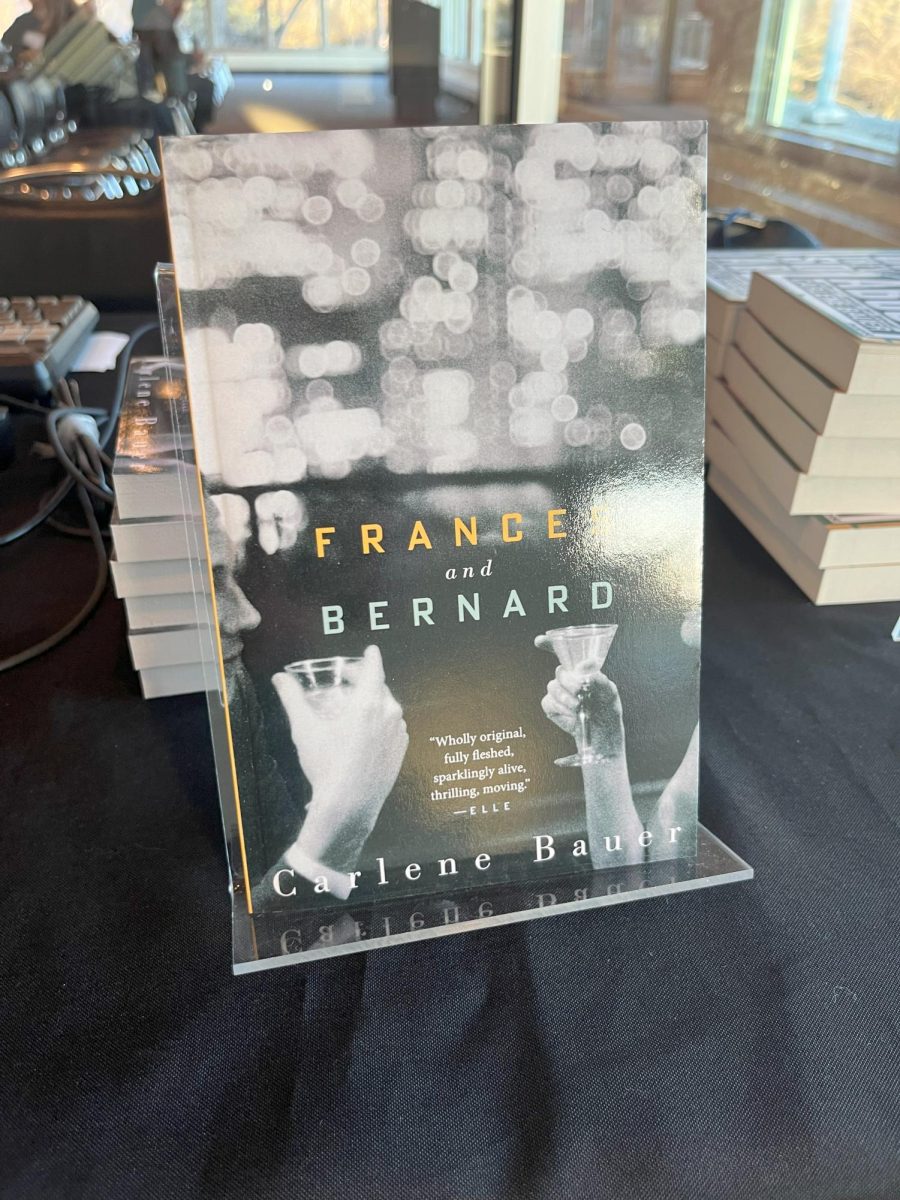
Broadwater and Karni said the chaos during the Biden administration prompted them to team up and write the book, ‘Mad House: How Donald Trump, MAGA Mean Girls, a Former Used Car Salesman, a Florida Nepo Baby, and a Man with Rats in His Walls Broke Congress.’
“They were all stabbing each other in the back and became like a circular firing squad. And we thought, well, this should be a book,” Broadwater said.
The two New York Times reporters explained the nature of book reporting offered more freedom and yielded more honest responses from interviewees, who are accustomed to having more instant publication of their words. Further, they defined the culture of Congress as a much more open reporting environment in contrast to that of the White House.
“We had no problem getting full cooperation from, well, everyone except Matt Gaetz, to participate in our book. And happily … they all hate each other,” Karni said.
After opening the floor to questions, a student asked when it is appropriate for journalists to ‘call a spade a spade’ while remaining unbiased, particularly in potentially labeling the current United States government as tyrannical or oligarchical. The speakers responded that while they do not believe we can accurately characterize the government in this way quite yet, they do find it important to call things as they are and demonstrated how the press has faced difficulties doing so in the past.
Karni explained the deep conversations and intense thought behind deciding when to use certain terms with strong connotations. For example, Karni expressed her thoughts on why the New York Times does not label President Trump as a fascist.
“I remember unpacking whether or not it is [fascism]. A fascist state doesn’t have a free press that can write a story about it being a fascist state. So, we’re not all the way there yet, but are you a fascist state if you have three out of five traits of a fascist state?” Karni said.
Karni reflected back to conversations during the 2016 Trump presidency. She said The New York Times initially struggled to use the word ‘lie,’ as it implies that the subject knows what they are saying is not true. However, she said over the past 10 years, reporters have taken to using the word ‘lie’ and calling things racist more often, when previously they may have gone out of their way to find more sugar-coated labels such as ‘racially tense remarks.’
All three reporters acknowledged the ongoing struggle to cover politics and political leaders. Each of the speakers revealed how they have witnessed colleagues and friends suffering the consequences of the apparent withering of the journalism industry, noting many around them have lost their jobs due to lost funding and budget cuts.
“I feel fortunate every day to still have a job,” said Summers, after which Broadwater and Karni echoed the sentiment.
“Every institution is breaking down right now [meaning Congress]. But we all live with the constant fear of the breakdown of our industry. It’s happening all the time around us,” Karni said.
Job losses are not the only challenges confronting journalists today, though. Broadwater touched on how lawsuits are affecting journalism, both on an organizational and personal level, as President Trump has filed suits against several news outlets as well as individual reporters on his team at the New York Times.
The journalists also discussed how many institutions are stepping up to protect employees. They referred to The New York Times’ lawsuit against the Pentagon after Secretary of Defense Pete Hegseth established a rule which would force all reporters to sign a pledge saying they would only share information that had been officially approved for public release.
These restrictions caused dozens of reporters to turn in their access badges and stage a walk-out of the building.
On March 20, 2026, Federal Judge Paul Friedman agreed with the New York Times, finding the policy was in violation of both the first and fifth amendments. But the Pentagon is appealing the ruling, and the following Monday, announced its first ever closure of ‘Correspondents’ Corridor,’ which has served as a dedicated media workspace since 1972. This prohibits journalists from reporting within the building. The New York Times released this post, pledging to fight this latest restriction.
That could be seen as discouraging, but Summers says aspiring journalists should not allow recent events to prevent or deter them from pursuing the career.
“I don’t think there is any more important time to be a journalist, because people need access to independent news, context, and fair information. If we don’t have more people coming to this field, I think that would be detrimental to our democracy,” Summers said.
Karni encouraged students to chase stories that make a difference.
“There are stories everywhere. So, find where you can have the most impact, and just dig in, and don’t be scared,” Karni said.