


































































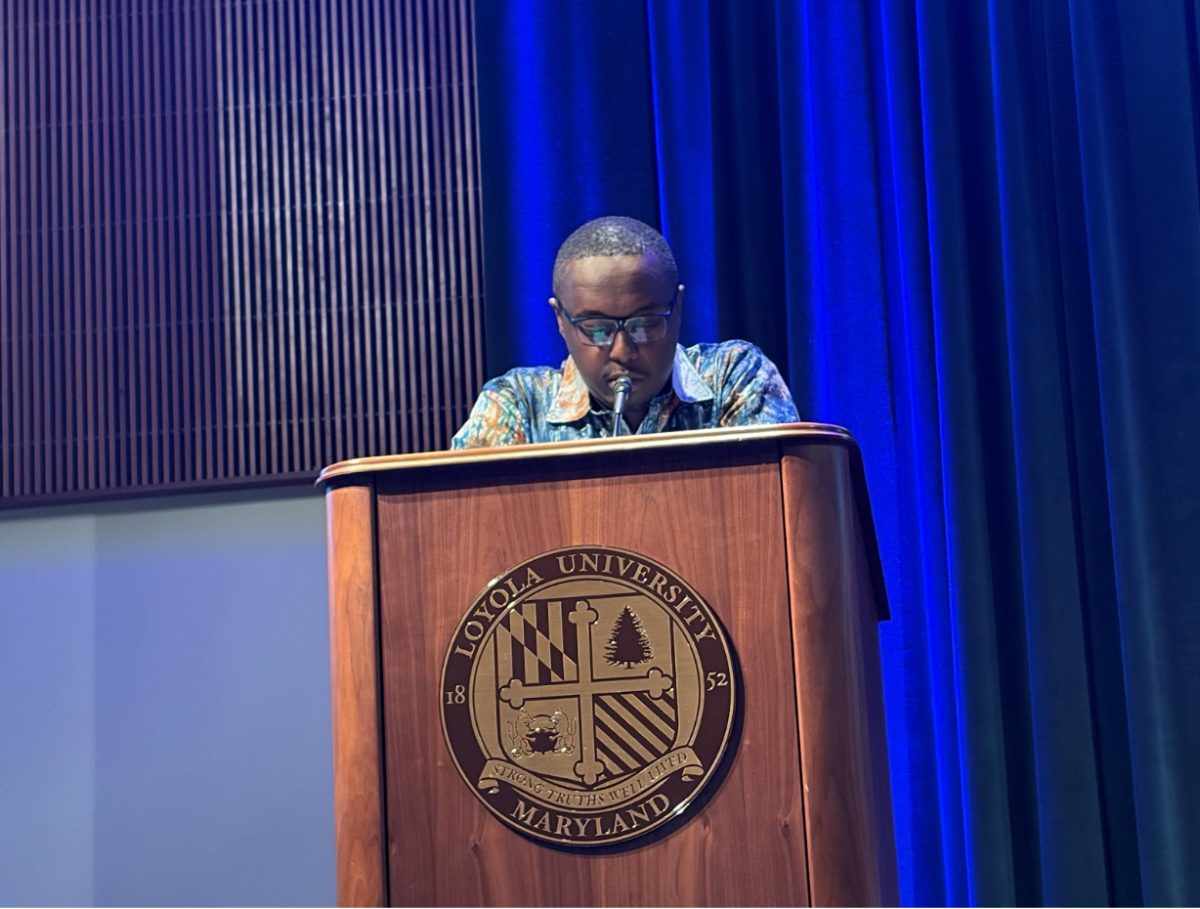
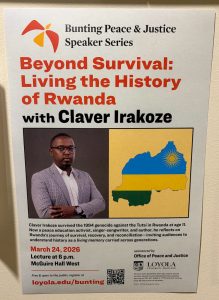
The Bunting Peace and Justice Series hosted Claver Irakoze, a peace and mental health advocate, on March 24. Irakoze is a survivor of the 1994 genocide against the Tutsi in Rwanda, which he experienced as an 11-year-old boy. Living through this experience, Irakoze has dedicated his life to promoting peace and mental well-being.
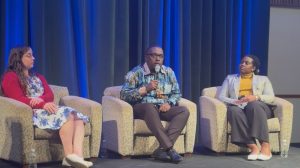
Through his authorship, songwriting, and public speaking appearances, Irakoze’s passion for sharing his story and leaving room for others to tell their story has reached the halls of Loyola. During the event, Irakoze spoke with French Professor and Director of the Peace and Justice Department Heidi Shaker, who moderated the panel.
Irakoze explained how the genocide opened his eyes, realizing that discrimination and hatred stunt a country’s growth. He also shared that being a survivor means that he had a chance to allow life to flourish to its fullest.
Michael Rosario-Muriel
“That’s why I have come to places like Loyola, to share my story. To discuss and engage with students, to allow their questions to be heard. It really comes from that desire to share the story of young generations to know what happened in order for them to prevent it from happening in their spaces,” Irakoze said.
Irakoze explained the duty he has in explaining his perspective of Rwanda’s history, claiming that staying silent is not an option for him. He referred to his experience with his daughter, and that through her, he was able to process and relive these memories constructively.
“If what I have is trauma that is unprocessed, I’m likely to pass it on. Revisiting those memories really helped me make sense of those memories, the hardest ones, and I said okay, I’m not going to change my past, but I’m not going to let my past define who I want to be,” Irakoze said.
Irakoze emphasizes the responsibility he has to share this information not only to his children, but to students alike. An attendee of the Beyond Survival: Living the History of Rwanda event Trey Sanders ‘26 shares the insight he gained from listening to Irakoze.
“The part that resonated with me the most when he was talking about how to deal with trauma … We have to take the memories that we’ve experienced, not only to better ourselves, but also to understand that there’s more to life than to survive. It’s to use those memories and to use those experiences,” Sanders said.
Irakoze’s thoughts and experiences left their mark on students and faculty, especially moderator Shaker. She shared why she and her colleagues thought that Claver Irakoze would be perfect to speak at Loyola.
“We thought that students would be really transformed by interacting with him. It’s one thing to read or learn about the genocide; it’s a completely different thing to meet somebody who’s lived through that history, and you get to know them and connect with them,” Shaker said.
Shaker said that Irakoze is the very first Bunting Visiting Scholar. Instead of a speaker coming to Loyola for 1-2 days, Irakoze came all the way from Rwanda to speak in nine different peace and justice courses for the working week. She also offers another perspective to justify Irakoze’s stay.
“When you talk about trauma, or when you talk about genocide, it’s not one conversation. It’s many conversations … Some of our students take two or three classes that he went and talked to have conversations in the plural, which was really an important part of this trip and for this experience,” Shaker said.
Irakoze has set a precedent for the future of the Bunting Peace and Justice Speaker Series, which revolves more around community, intimate personal questions, and consistent clarity and authenticity.
To learn more about Claver Irakoze or The Bunting Peace and Justice Series, you can visit The Bridge.