

















































































The following represents the opinion of the student reporter and does not represent the views of Loyola University Maryland, the Greyhound, or Loyola University’s Department of Communication.
In an October 2024 survey, The New York Times asked 50 legal experts what a second Trump term might mean for the Justice Department and the rule of law. The group was evenly split between Democrats and Republicans, and included officials who had held senior legal positions across every administration since Reagan.
In that first survey, most respondents said they were concerned about the prospect of a second Trump administration, though not all agreed. A handful of dissenters dismissed those worries as exaggerated, arguing that the Department of Justice (DOJ) would once again be staffed by elite, conservative lawyers who saw themselves as institutionally independent, just as it had been during Trump’s first term.
By the follow-up survey, conducted eight months into President Donald Trump’s second term, the divide had disappeared. Nearly every respondent said the danger to rule of law had intensified beyond what they had seen in Trump’s first administration, and every single one of them agreed that the DOJ was now being used as a tool to target political opponents while favoring allies.
One former senior official, who had served under presidents of both parties, including Trump’s first administration, said that, “What’s happening is anathema to everything we’ve ever stood for in the Department of Justice.”
When I first read all of this about a month ago, I wasn’t necessarily surprised by the survey’s results, but it still resonated with me. It captured a sense of unease that I’ve felt throughout my time studying law, a feeling that was echoed almost exactly by Sophia Capone, President of the Pre-Law Society.
“It’s scary to be in these classes talking about things like weaponized law enforcement and erosion of due process as if they’re theoretical, when it’s very much happening in front of our eyes,” Capone explained.
Over the past year, that unease has taken on a concrete shape. Longstanding norms meant to keep the Justice Department insulated from presidential influence have been steadily eroded. DOJ officials who resisted pursuing the president’s personal enemies have been fired or pushed out, while loyalists with little prosecutorial experience have been elevated in their place. Baseless investigations have been launched against political opponents as well as prosecutors who previously investigated the president.
What once functioned as a largely independent institution has increasingly been treated as an extension of the president’s political agenda, and a tool in his broader campaign of retribution.
The pressure hasn’t stopped at the Justice Department. Trump has also escalated a wider war on the legal profession itself, targeting law firms that have represented his critics or causes he opposes, and openly threatening consequences for lawyers who challenge him. The trends have been so concerning that the United States was made this year’s spotlight nation for International Day of the Endangered Lawyer, a designation chosen by vote among a coalition of more than 40 bar associations and legal organizations worldwide.
“It kind of feels like I’m standing at a crossroads. I’m still committed to pursuing law, but I now have a much heavier awareness of how fragile our legal institutions really are.” Capone said.
For students and everyday citizens alike, it’s become increasingly difficult to keep track of what actually matters amid the constant churn of headlines. Each week brings a new controversy, executive action, or institutional shock, so many, in fact, that even developments like these with serious constitutional implications can blur together and fade from focus.
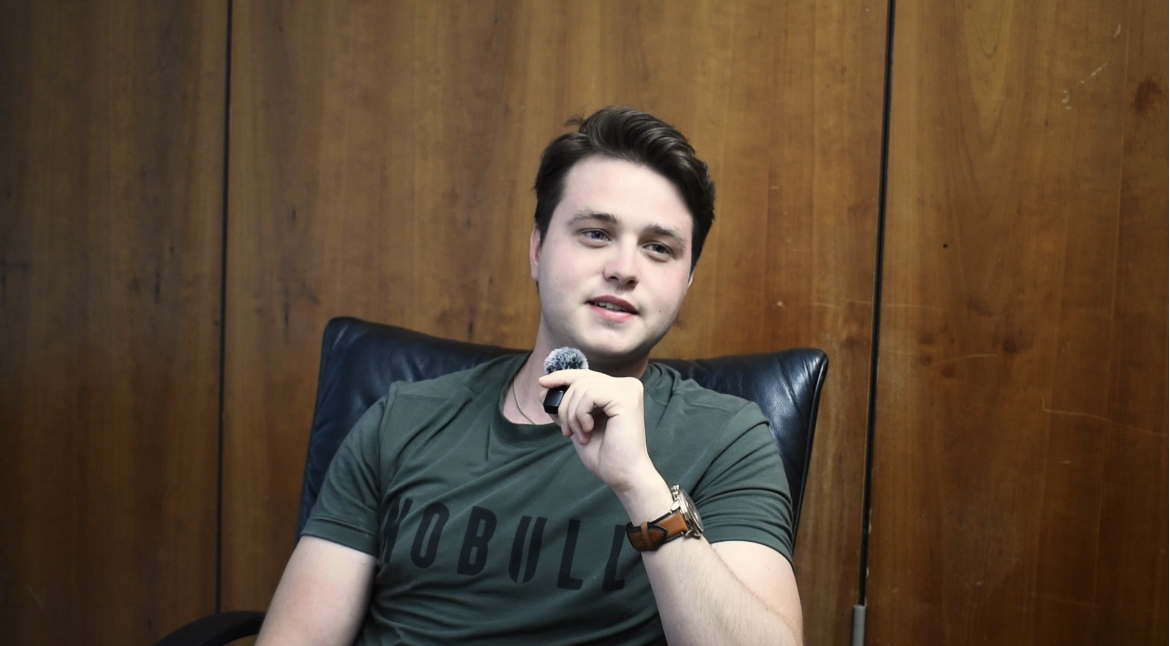
“There’s just a point where it becomes too much to process, and that’s what they count on,” said Dr. Matt Beverlin, Political Science professor and Pre-Law Advisor at Loyola University Maryland.
That’s precisely why I think it’s crucial to stop and focus on what has unfolded at the Justice Department in less than a year. Especially for anyone skeptical of broader criticisms of the Trump administration, or inclined to see public outrage as overstated, the DOJ provides one of the clearest case studies of how aggressively this administration has moved to dismantle the constitutional norms that have long constrained executive power.
Immediately upon reentering office, Trump took steps to carry out his threats against prosecutors who had previously investigated him. Just two weeks into the second administration, and only hours after Pam Bondi was sworn in as attorney general, the administration released a memo establishing the ‘Weaponization Working Group’ within the DOJ.
The memo framed the group as a safeguard against the ‘weaponization’ of federal law enforcement. In practice, its function aligned squarely with its title. The group was designed to investigate and retaliate against individuals who had scrutinized or opposed the president. The memo even included a list of grievances and named prosecutors, all of whom had previously worked on cases involving Trump, slated for investigation, despite no clear indication of criminal wrongdoing.
Under ordinary circumstances, allegations of official misconduct are reviewed by the Justice Department’s independent watchdog, the inspector general. The memo establishing the Weaponization Working Group bypassed that process entirely, vesting investigative authority directly in prosecutors and stripping away a critical layer of neutral oversight meant to prevent precisely this kind of abuse.
In September, top U.S. attorney Erik Siebert resigned after Trump publicly called for his firing during a televised press conference. Siebert’s offense was refusing to prosecute James Comey and Letitia James, both personal enemies of Trump, and individuals whom Siebert and other career prosecutors had long determined there was insufficient evidence to charge.
Trump moved quickly to replace Siebert with someone willing to proceed with indictments: Lindsey Halligan, his former personal attorney. Her appointment immediately raised alarms among legal experts and within the DOJ itself.
“Lindsey Halligan was an insurance litigator before this and had no experience as a prosecutor, no experience as a federal attorney, and certainly no experience as a supervisory prosecutor. Zero. She is an under-qualified political hack who’s willing to do the work,” Beverlin said.
Halligan’s first order of business was to push forward with the indictment of Comey, followed by efforts to pursue James.
None of these decisions occurred in isolation. Together, they form a pattern, one in which political loyalty determines who is protected and who is prosecuted. These patterns have names in constitutional law.
Beverlin said they are making a prima facie (meaning “at first sight” or “on its face”) case of both selective and vindictive prosecution, two of the most serious constitutional violations the government can commit.
Selective prosecution occurs when the state chooses whom to charge not based on evidence, but based on identity. Vindictive prosecution targets individuals because they exercised their rights or previously challenged the government. In this case, the administration isn’t even pretending otherwise.
Internally, the Justice Department now reflects the same dynamic seen in its prosecutions. Experienced career lawyers have been sidelined or forced out, while authority has shifted toward politically aligned figures whose advancement depends less on legal judgment than on loyalty.
What has happened to the DOJ, however, is not unique. It mirrors a broader transformation across the federal government, where agencies have been reshaped to reward obedience, partisan alignment, and a willingness to disregard norms when doing so serves the administration’s interests.
“It’s a bunch of self-interested people. He’s at the top of the pyramid. Then you have the self-interested FBI director, the self-interested attorney general, and so on. If you don’t have integrity or character, you’re going to attract those people, like ants to a picnic,” said Beverlin.
This also explains why the second Trump term has unfolded so differently from the first. Staffing, Beverlin argues, is the key.
In Trump’s first administration, senior positions were still occupied by more conventional Republicans who, while conservative, were willing to push back.
“They had enough backbone to tell him no,” Beverlin said.
This time, those people have been deliberately excluded.
“He’s skipped the people with spines entirely. Now no one is telling him no, and it’s astounding to watch,” said Beverlin.
Though this pattern has been replicated across all federal agencies under the Trump administration, it matters the most at the Department of Justice. Unlike other agencies, the DOJ has uniquely direct power over individual freedom. When people imagine government overreach, they often picture intelligence agencies or the military. But as former Supreme Court Justice Robert Jackson warned while serving as attorney general, “The prosecutor has more control over life, liberty and reputation than any other person in America.”
In late November, a federal judge dismissed the indictments against Comey and James, ruling that Halligan had been unlawfully appointed and therefore lacked the authority to pursue the cases at all. Everything she had done, the court held, was legally void.
It was an extraordinary rebuke. But it was not a safeguard.
The dismissals don’t erase what already happened. For months, two of the president’s most prominent critics were dragged through criminal investigations, media cycles, and public suspicion, all without a lawfully appointed prosecutor in place. Even when cases collapse, the process itself becomes the punishment.
“There’s a certain aspect of being a prosecutor and having communication with the public. But the purpose of it is not to mete out further punishment to someone you’ve indicted, especially when, to be frank, you don’t expect to actually get a conviction,” Beverlin said.
Put differently, these prosecutions did not hinge on courtroom success. Their value lay in exposure, humiliation, and deterrence, a warning to anyone who might consider scrutinizing a president in the future.
That strategy was reinforced by Trump’s constant public commentary. Throughout the Comey and James cases, he repeatedly used Truth Social and press appearances to demand action from the Justice Department, attack the defendants by name, and frame the prosecutions as overdue retribution.
Even with the dismissals, nothing in the ruling prevents this administration, or a future one, from attempting the same strategy again, this time with a prosecutor whose appointment technically checks the right boxes. The blueprint now exists.
The administration’s misuse of the law was captured starkly in a recent federal ruling blocking the administration’s attempt to dismantle Temporary Protected Status for Haitian immigrants.
“There is an old adage among lawyers. If you have the facts on your side, pound the facts. If you have the law on your side, pound the law. If you have neither, pound the table. Secretary Noem, the record to-date shows, does not have the facts on her side– or at least has ignored them. Does not have the law on her side– or at least has ignored it. Having neither and bringing the adage into the 21st century, she pounds X (twitter)”, Judge Juan Merchan Reyes wrote.
In a single passage, the court put words to what has come to define this administration’s approach: when facts and statutes fail to support the desired outcome, pressure, spectacle, and intimidation step in instead.
For students studying law right now, the reality is difficult to ignore. That tension is unsettling, but it is also clarifying. If the past year has revealed how easily legal norms can be weakened, it has also underscored why they exist in the first place, and why they require people willing to defend them.
At a moment when the rule of law feels less secure than it should, the work of understanding it, challenging its misuse, and helping to restore its credibility is more necessary than ever before.