



















































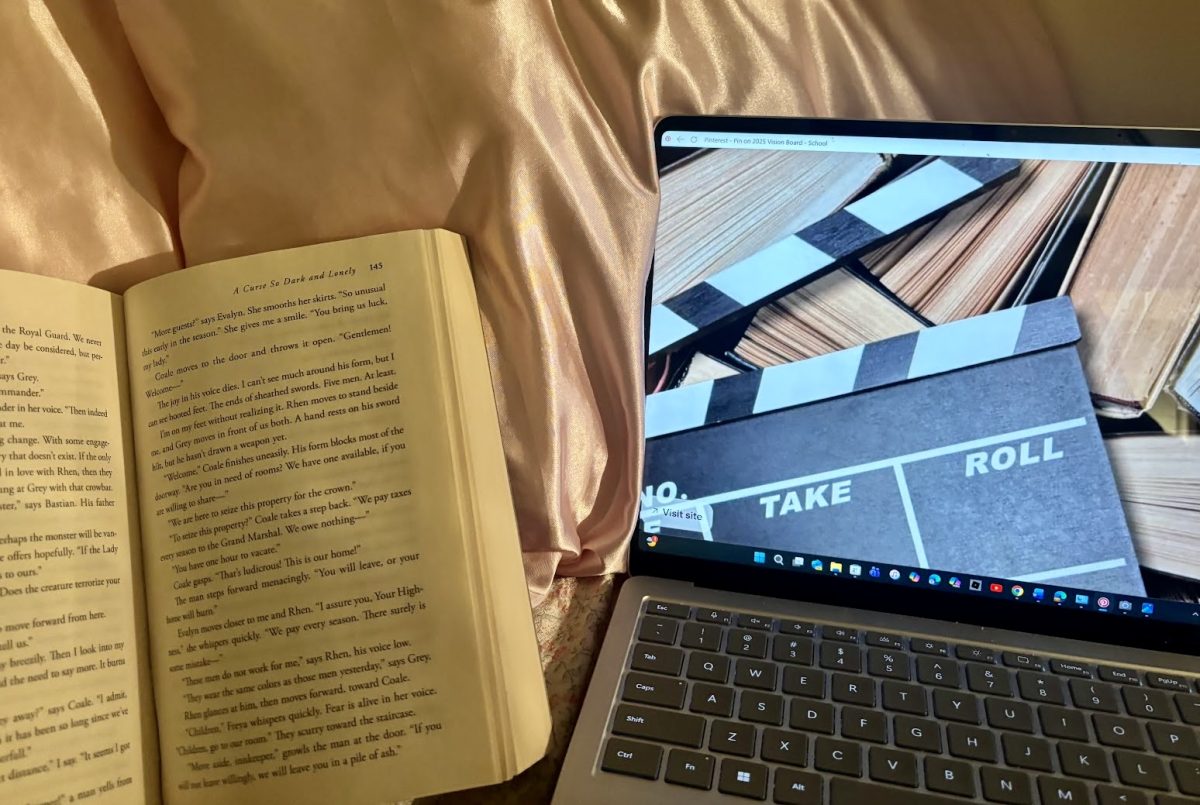
On a college campus where time feels scarce and screens dominate our daily lives, the choice between reading and watching often comes down to a choice of convenience. A two-hour movie fits neatly into a busy schedule, while reading a book requires patience and focus. When the goal is to truly connect with a story, reading remains the stronger choice despite the convenience of movies.
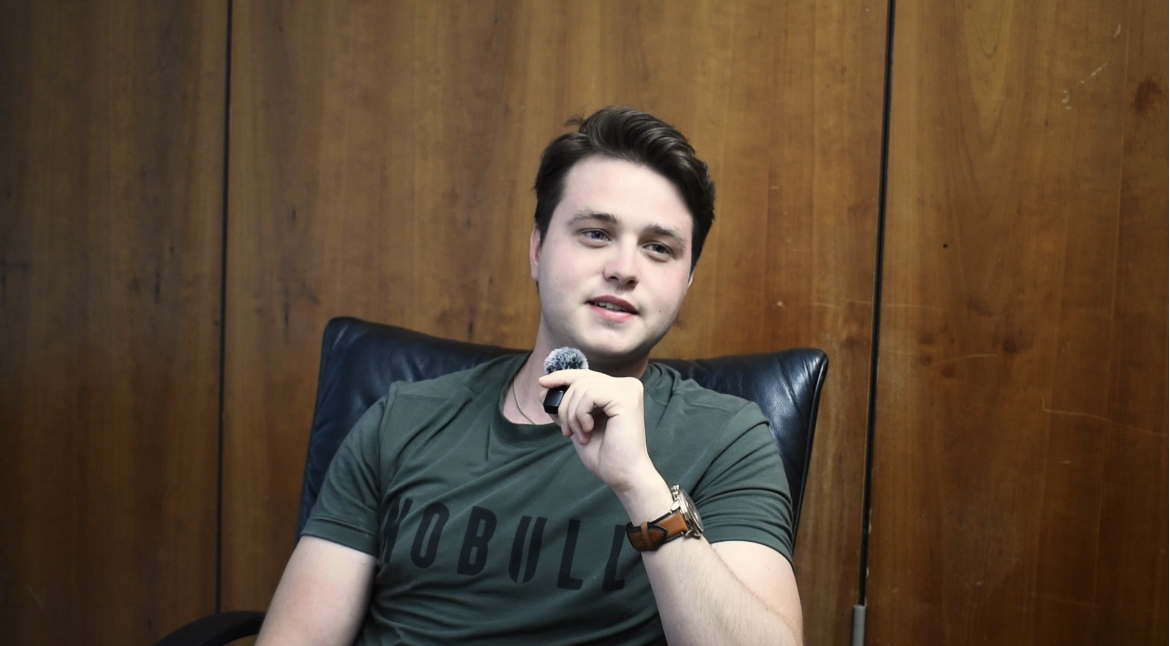
Students across campus echoed that books offer more depth and context than movies alone. Julianna Stroming ’28 says that reading first leads to a fuller understanding of a story.
“I feel like when you read a book for the first time, you understand more. But if you watch the movie first, there could be things left out of the book you are unaware about,” Stroming said.
This sense of understanding highlights what many students say makes reading more immersive. Books allow students to sit with a story, absorb details and form connections with the characters that movies cannot. While movies can highlight key moments and bring visuals to life, they often compress stories to fit a limited runtime, leaving out details that shape how fully a story is understood.
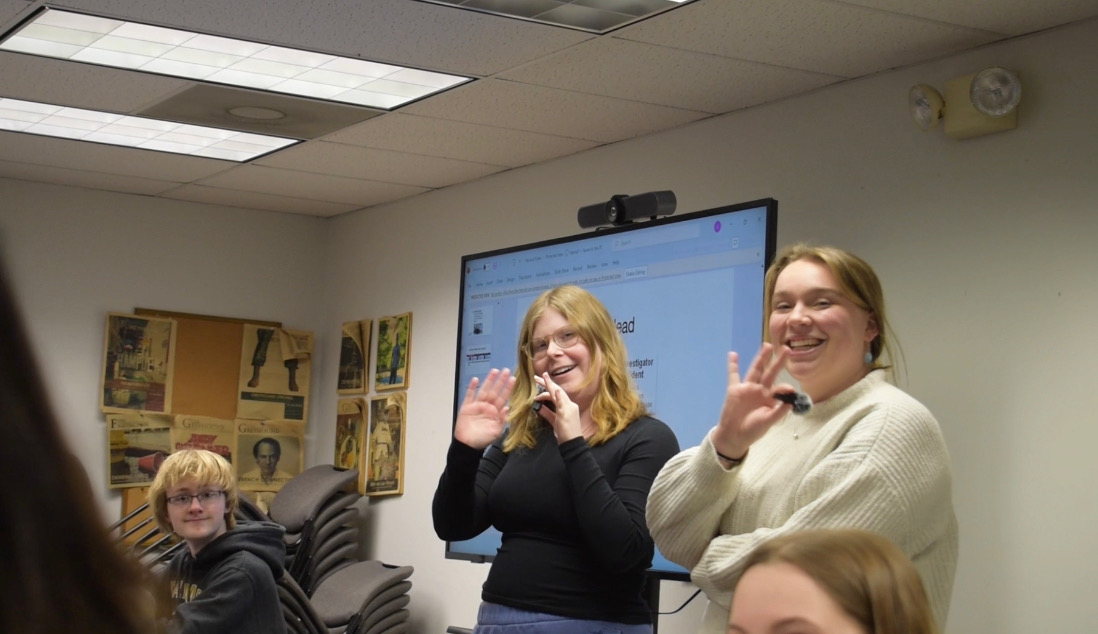
Other students emphasize the personalization of reading. Elise Dougherty ‘28 notes that books allow for individual interpretation.
“Books are so unique in the fact that everyone reads the same book, but everyone is going to have a different takeaway. Versus with a movie, you have a very concrete example and experience for all the people, and I think you gain a lot in that,” Dougherty said.
That individuality is what gives books their emotional weight. While films present a shared, fixed, version of a story, reading allows the reader to imagine characters and settings in their own way, creating a more intimate connection.
Students and faculty also acknowledge that some movies work better than their books, particularly when it comes to classic literature. Dr. Hunter Plummer, a teaching professor in the English department, said that film adaptations like ‘Pride and Prejudice’ can make stories more accessible.
“I feel like with classic books like with ‘Pride and Prejudice’ it’s easier when you see it on film. Picking up the book and realizing ‘Oh this is not what I remember ‘was a very interesting experience,” Plummer said.
Doughtery echoed this statement, noting that the language in classic literature can be difficult for modern readers.
“I think movies are a great way to visualize a story for those who aren’t big readers. Especially with more classic literature like with ‘Pride and Prejudice,’ I don’t think you can understand the same nuances that happen in the movies because the wording is very different,” Dougherty said.
Plummer also points out how the film for ‘Pride and Prejudice’ helped make the characters and love stories more memorable. He also speaks about how the movie helps modern audiences emotionally connect to stories written centuries ago.
“It tells the same story, but in a very different way that really underlines the romance between Mr. Darcy and Elizabeth Bennett. In a way, there are moments in the book that feel rigid.” Plummer said.
Plummer also notes that visual elements like music and scenery allow films to communicate emotion in ways that written language from earlier language couldn’t convey.
“It’s tough to get through in a contemporary way that this is deep passionate love 200 years ago. But the movie can do that because it has this brilliant score and scenery that make you think Mr. Darcy and Elizabeth Bennett are deeply in love,” Plummer said.
Movies can succeed but they do so by interpreting the story for the watcher. When a movie works especially well, it often simplifies complex language, heightens emotions through visuals and music, and clarifies relationships. While that can be effective for a movie to succeed, it also removes the ambiguity and interior reflection that books allow the reader to explore on their own.
That distinction between films and literature is reflected in how students experience stories. Books have the time and space to develop world-building, character motivation, and emotional depth in a way a two-hour movie cannot.
“When it comes to reading, you are given a lot more information whether it’s about world building, how a character thinks and acts, and explanation of a certain mechanic. However, when it comes to movies, they give you the actual visuals to the story you are reading,” Stroming said.
Dr.Plummer echoed that distinction, emphasizing that books and films serve fundamentally different purposes in how stories are told.
“They are completely different mediums, and you can’t accomplish the same goals in each of them. If the goal is to understand the story, it would be useful to prioritize one or the other,” Plummer said.
Movies can be powerful tools for storytelling, especially when helping the audience engage with unfamiliar or difficult texts. But even when films do succeed, they cannot replace what reading offers. Yet reading invites patience, emotional investment, and imagination. These are experiences that movies, no matter how well made, cannot fully replicate. While movies may enhance the experience, for many, the pages are truly where the story truly begins.