
















































In 2018, Jennifer and Adrian Goldszmidt’s daughter, Zoe, was 17 and approaching the end of her high school career. Zoe, who was diagnosed with autism when she was 2, could remain in her school district until she was 21 years old. Jennifer Goldszmidt remembers losing sleep with worry over her daughter’s future.
In the months following, the Goldszmidts were researching work opportunities for someone with a disability. Jennifer Goldszmidt said that every option she found was either too ‘warehouse-y’ or too ‘sophisticated.’ There were some options for job placement through organizations in Baltimore like Itineris and The Arc, but the waitlists were always extremely long and therefore not feasible for Zoe’s timeline.
The Goldszmidts decided that if there wasn’t the right opportunity, they would create their own: Zoe’s Just Dezzerts was born. Five years later, the bakery has two locations in Baltimore and now have a full staff, all proud of their neurodivergence.
Goldszmidt said she and her husband believe that community members and adults with disabilities do not have adequate access and opportunity to work, and local businesses are missing out by not hiring employees that are neurodivergent or disabled.
“You have people who are incredibly motivated to work, and they take their jobs extremely seriously,” Goldszmidt said.
Many of the employees, like 29-year-old Kamani Batista, had never been hired or gotten paid for their work. Batista sought employment before, but employers would only give him volunteer work without pay. Now, he gets to save his own paychecks, something he has always wanted to do.
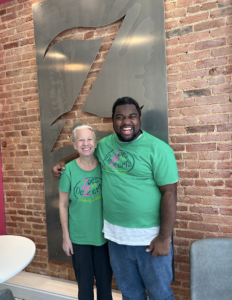
“Somebody found an opportunity for me,” Batista said.
The core of Zoe’s Just Dezzerts is to employ people who can do complicated tasks or interact with customers despite the limited expectations others may have due to their diagnoses. The bakery has been meaningful for both Goldszmidt and her employees.
“I’ve done my share of retail work. They were fun times, but there was no sense of ‘I’m looking forward to this’ or ‘I think we can do something really cool here.’ [Zoe’s] gives me a mission. [Zoe’s] gives me a purpose,” Goldszmidt said
The U.S. Department of Labor found that only 23% of adults with disabilities are employed, meaning there just are not enough jobs for people who want to work. Goldszmidt thinks it’s because there is a misconception about how hard it is for the employer to work with people with disabilities.
Chief Advancement Officer of The Arc Baltimore Chris Knoerlein said there is a common misconception that hiring someone with a disability is an act of charity instead of good business. The Arc is committed to proving that hiring an employee with disabilities will provide quality work.
“I can guarantee you that they’re getting the necessary training, we have follow-up support, and we have job coaches that can help facilitate a conversation around a problem,” Knoerlein said.
Goldszmidt and Knoerlein both agreed that a different approach is usually needed if training a neurodivergent person compared to a neurotypical person. But making those changes are not as hard as one may think, and the return on investment is high. With this, both employees and employers succeed, Knoerlein believes.
“It’s about finding opportunities where this person can do the job, grow, and benefit your bottom line,” Knoerlein said.
For Zoe’s Just Dezzerts, the upfront time investment of creating a specific training plan paid off in results. Goldszmidt created her training plan specifically tailored to people with neurodivergence or Down Syndrome. She credited free online software that breaks tasks into smaller increments, and then demonstrated and modeled the tasks to the newly hired employees, giving them time to practice. Goldszmidt also has a stash of fidget toys and a low-stimuli breakroom for the employees.
In 2026, customers at Zoe’s Just Dezzerts receive a handwritten thank you card from Zoe. She recommends the sour cherry tarts, one of the bakery’s specialties. Zoe also suggests everyone attend the biweekly karaoke party on Friday nights.
These traditions point to a workplace culture built around inclusion.
Knoerlein said inclusive hiring strengthens businesses at every level.
“It’s the right thing to do for your bottom line, and for your culture,” Knoerlein said.
Jennifer Goldszmidt • Feb 5, 2026 at 2:31 pm
Thank you for bringing the spotlight to people who not only need work, but who can be fantastic employees who are motivated to give you their very best.