
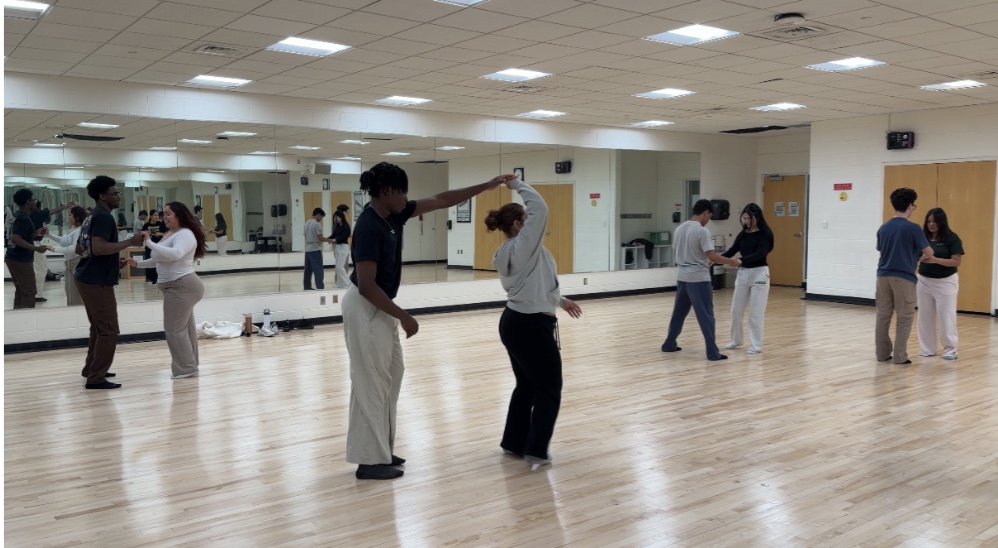















































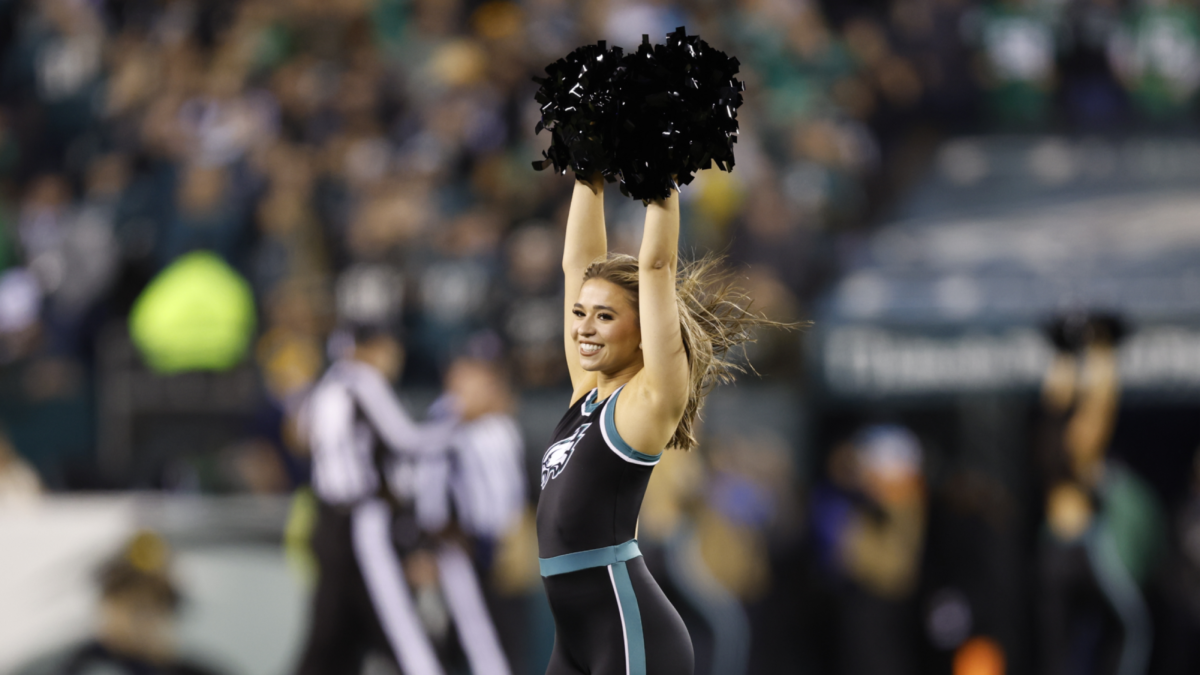

















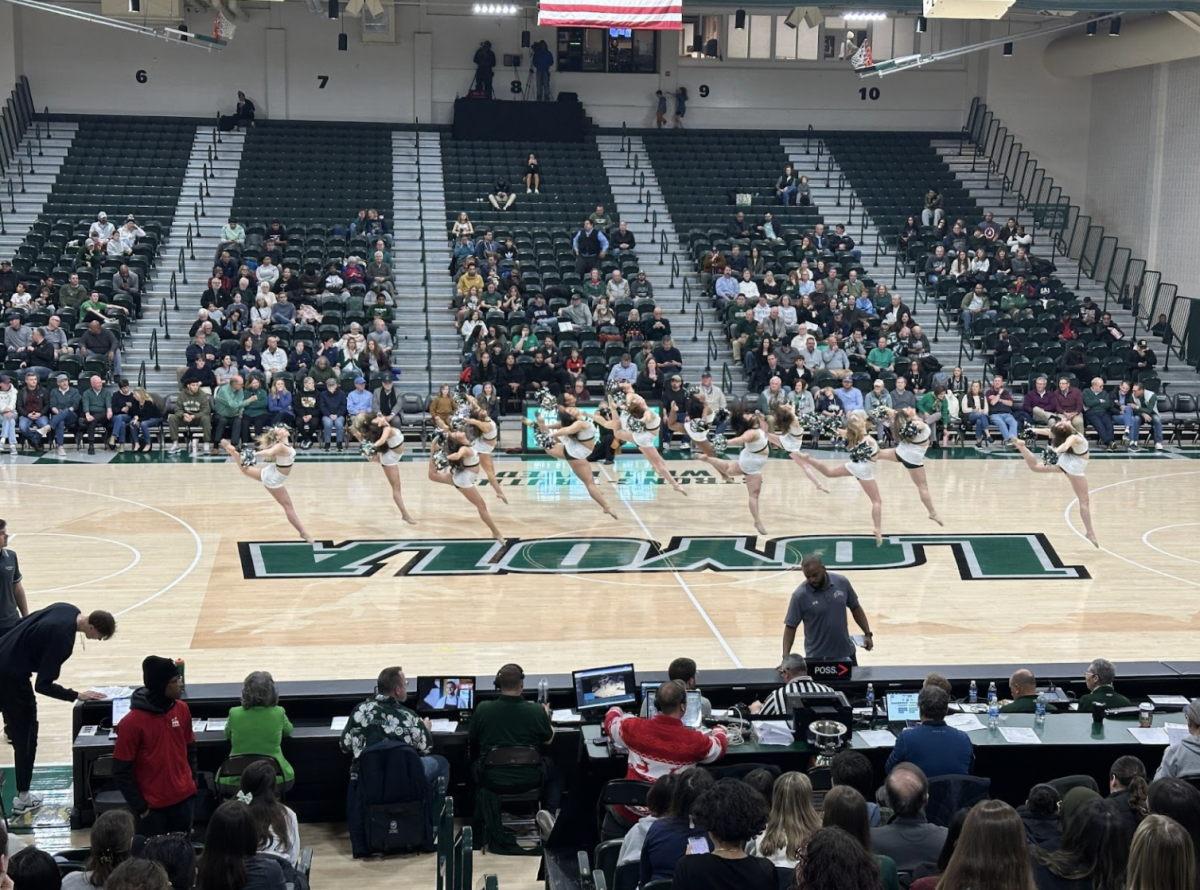
Deep into preparation for the 2025 National Dance Alliance (NDA) College Nationals, Julia Baratta ‘28, a member of Loyola’s dance team, sat on the gym floor, exhausted. She had been pushing her body to new limits, practicing twice a day, four days a week, to perfect her squad’s routine.
Prioritizing dance over her personal life, Baratta has continuously sacrificed having full Christmas, Spring, and Easter breaks. As she finished another routine run-through, Baratta began to wonder, with all the work she was putting in, how she and her teammates were still not NCAA-sanctioned athletes.
Growing up as a dancer, Baratta was second-guessed her whole life, not for her skills but for her choice of sport, which was often dismissed as not a sport but only an art. The constant invalidation of dance Baratta experienced made her want the general public to be more informed of the activity’s wide scope.
“There’s dance as an art, and companies and shows and things like that, and then there’s dance teams that compete nationally and hold national titles. So, it’s a little discouraging, because I think we’re just as important as any other sport,” Baratta said.
As Baratta has continued to grow in the sport, that invalidation has spread from just those around her to a higher authority now, the National Collegiate Athletic Association (NCAA). While the NCAA recognizes over 20 different sports, dance is not one of them. Consequently, Loyola’s Dance Team is only classified as a club sport, despite competing nationally and training rigorously.
According to the NCAA, for dance to become a NCAA sport, it must be designated as an Emerging Sport for Women. Achieving this title then creates a pathway for the requested sport to become a varsity sport under the NCAA. One of the main obstacles for dance becoming a NCAA sport is the rule requiring all Emerging Sports for Women to hold at least eight competitions.
Head Coach of the Loyola Dance Team Christina George believes that this rule was not designed with dance in mind.
“It would be really detrimental to our ability to be at all of these other athletic events and support the programs on our campuses that we are here to do if we were also on the road and competing a minimum of eight times a year. And I don’t know what budgets we would have for them,” George said.
The NCAA also requires collegiate dance to have a national governing body that communicates directly with NCAA representatives to lead efforts to establish the new sport’s status.
Associate Director of External Communications at the NCAA Gail Dent said that organization has not received any applications from any dance governing body or other group for the sport to join the NCAA Emerging Sport for Women Program.
George believes that organizations such as the Universal Dance Association or USA Cheer are best suited to create such a governing body. Although these organizations have the staff and resources for the task, George recognizes the challenges of creating a national governing body.
“To get an entire country’s worth of dance teams to follow the same rules, it’s not easy. Not when we’ve all been operating under our own things for a long time. I started the State Association for Dance Teams here in Maryland … I can’t even get Maryland to buy into a lot of these things,” George said.
At the 2025 NDA College Nationals, Loyola’s Dance Team earned the best marks in school history, finishing in the top 10 overall in team performance and in the top 20 for jazz.
Excited by their accomplishments, the girls posted on social media to celebrate their team’s victory. Instead of receiving support and congratulations, the team was bombarded with negative comments on Fizz, a social media app where Loyola students can join the same chat channel and post anonymously.
The team made history, but their classmates on Fizz did not back their accomplishments. Rather, some posts read, ‘Loyola dance team is actually so cringe,’ and others called the team ‘chopped,’ a slang word for ugly.
Baratta’s past experiences with Fizz have been consistently negative, and she believes the constant hate towards the team on the app stems from anonymous Fizz posters who do not understand the hard work that the team puts into their routines.
“If you search ‘dance team’ [on Fizz], a lot of interesting things come up. Down to the makeup that we wear, our uniforms, our costumes, the way that we look,” Baratta said.
George works to keep her team encouraged and away from Fizz.
“They literally have no idea what you have been putting in for the last six months. They are only seeing what we put out on a game day, which is not this. And they’re only seeing the outcomes of what we post about, and they don’t see all the stuff that goes in between,” George said.
Despite negative comments from anonymous users on Fizz, the dance team has felt supported by prominent figures on campus, including President Terry Sawyer and First Lady Courtney Sawyer. Not only do they wear dance team merchandise around campus, but they also contribute to fundraisers and send verbal messages of encouragement. Other members of the community who have shown their support to the group include undergraduate admissions counselors, faculty and staff, and, especially, parents.
“Our parents are really like our number one fans … They’re always contributing to our fundraisers in any way, shape, or form, which is crazy because they’re already paying for their tuition,” George said.
As the Loyola Dance Team continues to dedicate hours of work to their sport, George believes that behind the scenes, the NCAA and dance will remain in a stalemate until a governing body for dance is established. George understands that coaches like herself lack the time to spearhead this movement, so she feels uncertain about the future of her dance team’s status.
“Do I see it changing? I don’t know how. I don’t think anybody has the answer,” George said.