
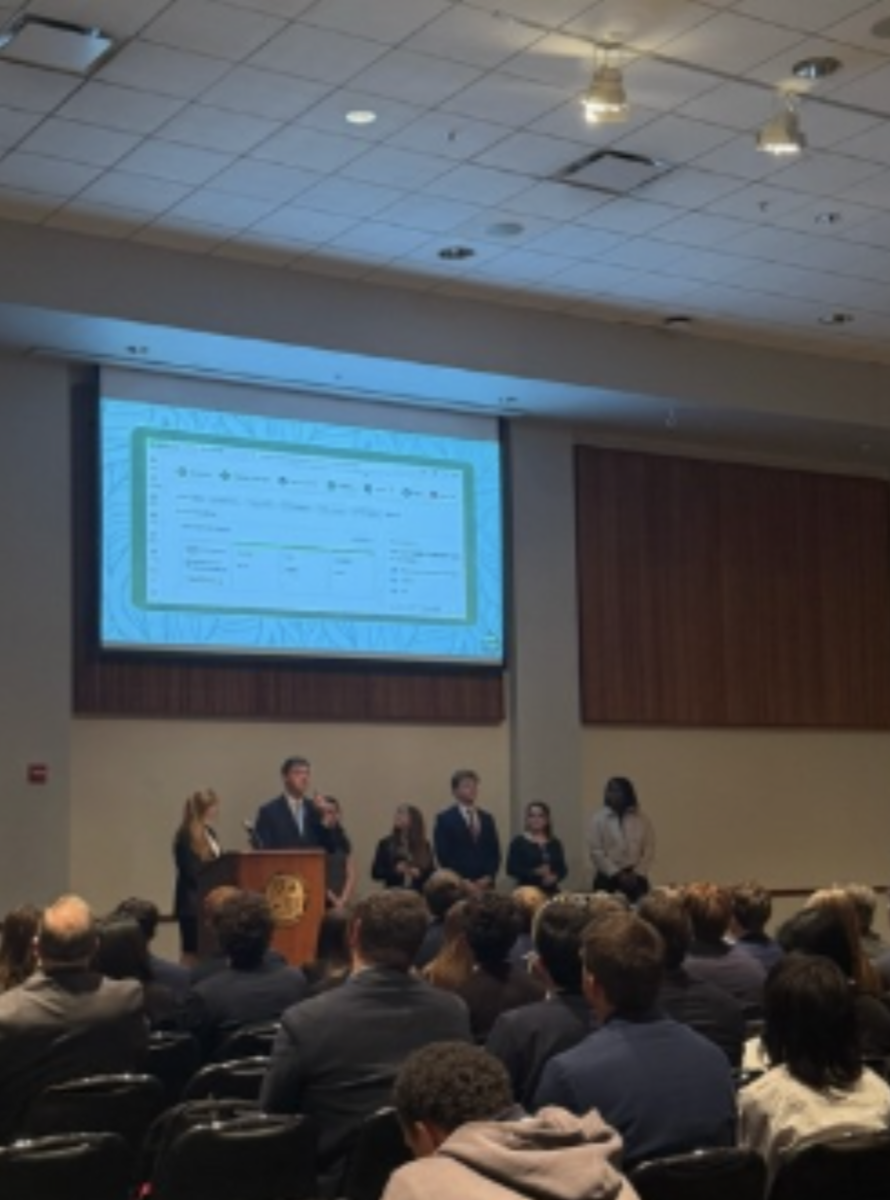





































































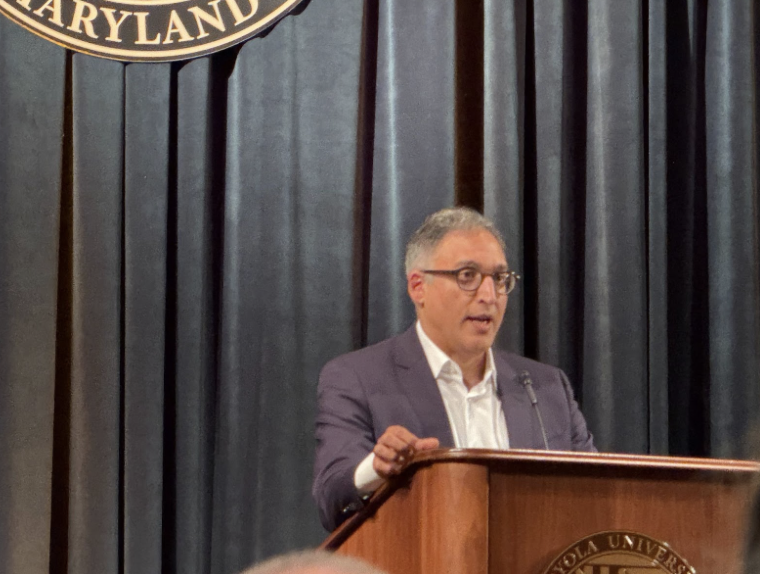
Loyola’s 2025 Humanities in Action lecture series featured former Acting Solicitor General Neal Katyal. Katyal has argued several prominent cases before the Supreme Court, including those concerning fair trial rights for detainees at Guantanamo Bay, same-sex marriage, and, most recently, the constitutionality of increased tariffs under the Trump Administration.
Katyal told the audience that he continues to view the Supreme Court as the crown jewel of democracy. In the case of Hamdan v. Rumsfeld (2006), Katyal challenged President Bush’s actions surrounding military trials at Guantanamo Bay.
Kaytal was a law professor at the time of 9/11 and its aftermath. He remembered being stuck by the unconstitutionality of some of President Bush’s actions as he claimed to be fighting a war on terror.
“We thought about using military tribunals against Al-Qaeda, but we thought that was obviously unconstitutional … My point was, maybe we need those military tribunals, and maybe we don’t. But the one thing I’m sure of is the president can’t do it through the stroke of his own pen,” Katyal said.
To fight the unconstitutional use of military tribunals, Katyal sued on behalf of a Guantanamo Bay detainee, Salim Ahmed Hamdan, and the suit ended up before the Supreme Court. Although this was Katyal’s first time arguing before the Supreme Court and his opponent’s 35th, the court ruled in his favor, declaring the Guantanamo tribunals unconstitutional.
Katyal believes that his first victory showcases what is so special about the Supreme Court.
“The great thing about being at the Supreme Court is, on the one side, you can have the fancy corporation with all their fancy lawyers and the law books piled up high. And on the other side is a guy, a little guy, who’s got none of that. But if the little guy’s got a good argument, he can win. Not always, but he can,” Katyal said.
In Katyal’s latest Supreme Court case, he argued that President Trump’s attempts to impose tariffs are unconstitutional. As he and the rest of the nation await the Court’s ruling, Katyal feels that this case is part of a historic battle.
Katyal said he often takes on cases with broad national impact, but he draws on his family’s immigrant background to motivate him to work diligently in court.
“I do think about my family and where they came from, and they came here because of our Constitution, because of our rights. And so, if I can play any role in helping protect that, I want to do that,” Katyal said.
Colleen Bayley ‘27 said she doesn’t pay much attention to politics, but Katyal’s words helped educate her about past and current political issues, such as the continuation of legalized same-sex marriage.
“It was very refreshing to hear, especially in person, that there are people still in politics who care about my well-being. Especially as a member of the LGBTQ community and everything that’s going on right now,” said Bayley.
Throughout his career, Katyal has been named Litigator of the Year, and, in Moore v. Harper (2023), a former federal judge said that Katyal delivered the best oral argument he had ever heard.
Associate Dean for the Humanities and History Professor Matthew Mulcahy shared his outlook on both Katyal’s historical impact and his influence on the Loyola community.
“I think he will be seen as one of the most important lawyers of the early 21st century, who’s having an absolutely huge impact on American jurisprudence,” Mulcahy said.
The Humanities in Action lecture concluded with Katyal’s advice to students considering careers in politics and law. He encouraged them to remember that they have more power than they think.
“One of the great things about being a lawyer is you can file a lawsuit against anyone, and obviously, you only want to do that in a responsible way, but that is how I launched my career … You have a lot of power, and it’s yours, it’s all of our jobs to exercise it to make the world better,” Katyal said.