
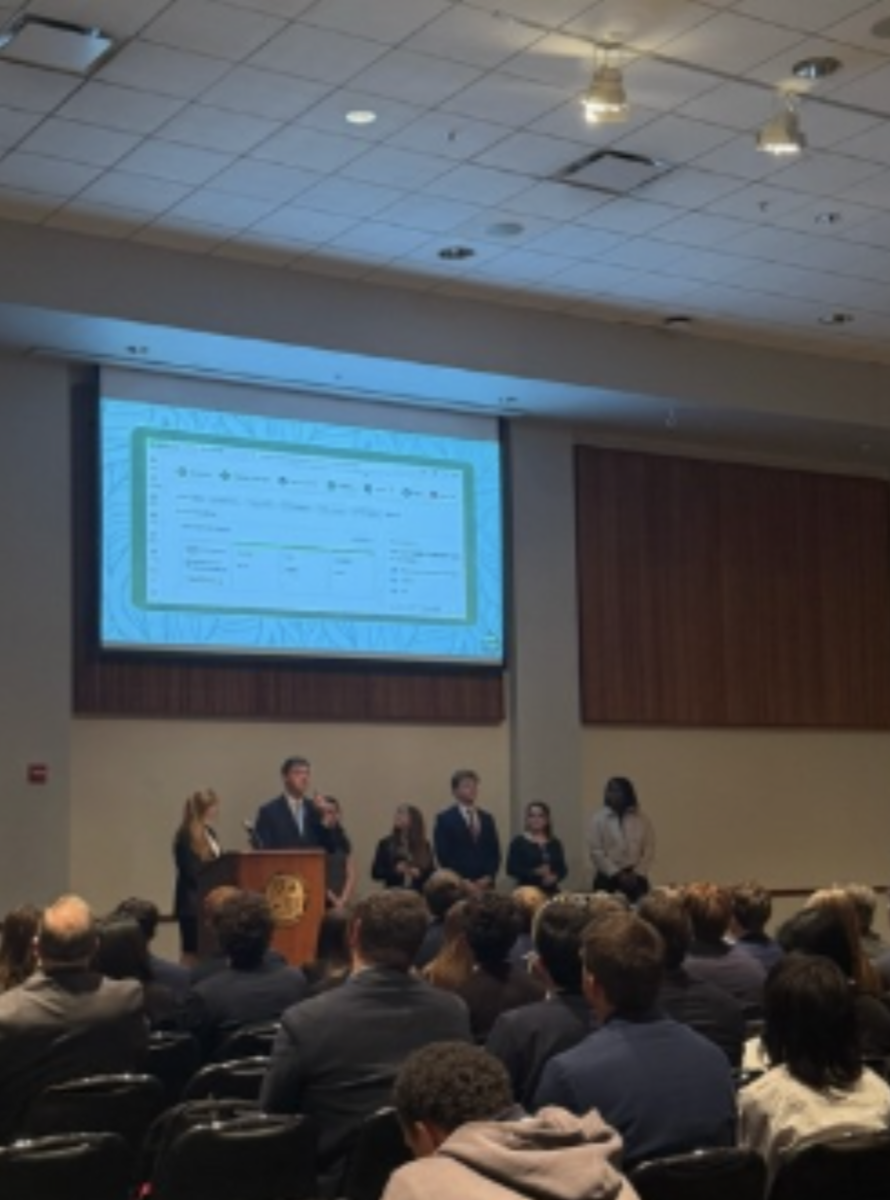

































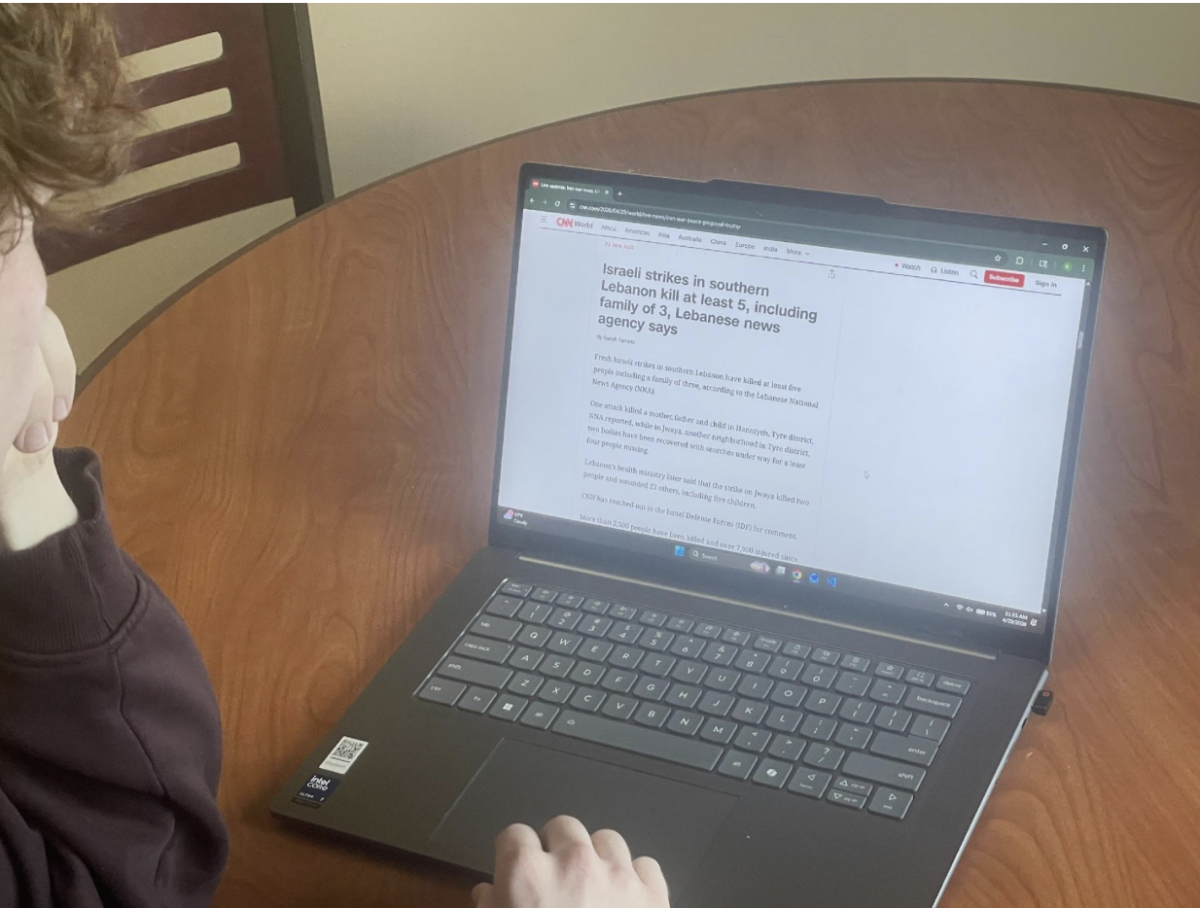















































In President Terry Sawyer’s most recent Loyola Town Hall in McGuire Hall, it was disclosed that Loyola closed the 2025 fiscal year with an operational deficit of $4 million.
For years, Loyola has been aiming to reduce this structural deficit, which is when spending exceeds revenue coming in. President Sawyer announced the implementation of four controversial changes as a part of the Operation Excellence Initiative that will affect Loyola staff and faculty.
Net tuition, also known as student revenue, is going up by roughly $5 million for the fiscal year of 2026. Despite this, tuition revenue is not enough to cover the ongoing operating costs in the structural deficit. Expenses surrounding spending have not decreased to match the university’s budget accordingly.
Loyola’s budget has depended largely on savings from vacant positions for some time, but this year that safety net was smaller. With fewer vacancies and faster hiring, expected savings did not materialize, while graduate revenue also fell short of projections.
At the same time, liability insurance and utility costs rose sharply, and planned temporary savings failed to take effect. Operating with little margin for error, this year Loyola relied on its reserve fund, also known as the plant fund, to close the $4 million deficit.
Assistant Professor of Economics Thomas Lyons reflected on the current circumstances facing the university.
“Universities are under a lot of financial pressure for several reasons. Loyola is a tuition dependent school, meaning most of its revenue comes from the students that attend. A college education is a big expense. In the last few years inflation has been higher, so families are being careful with their spending, and some are considering alternatives: community college, public universities, work instead of college. The university’s expenses are also going up, so there is a need to balance everything,” Lyons said.
Operational Excellence is a guiding commitment from Loyola’s strategic plan that informs the way faculty approach their work. It is a multi-year initiative pursuing the end goals of advancing institutional positioning, increasing resource efficiency, growing operational maturity, and strengthening financial resiliency.
Oftentimes during periods of financial deficit in universities, several suggested solutions arise, including to reduce class sizes and discount rates, raise tuition prices, or even lay off faculty.
The Operational Excellence website states that if a recommended financial solution arises from the President’s Cabinet, they intend to evaluate and align the decision with cura personalis and cura apostolica. The website made a point within this statement to highlight faculty layoffs as a potential solution. However, this suggestion is not currently included in the list of deficit reduction implementations.
Sawyer commented on his reasoning behind the budget deficit during the Town Hall.
“The reality is that with all good intentions, we budget too close to the line. A slight miss on revenue or an increase in expenses means that we fall into a deeper deficit. We leave ourselves with insufficient room for error, or the likelihood of unanticipated circumstances occurring is high” Sawyer said.
Listed below are the four implementations within the Operational Excellence initiative.
All 403(b) employer contributions, a voluntary amount an employee from a qualifying organization sets aside into a retirement savings account, will be reduced from 9 percent to 5 percent. This means that staff, including professors, will have a cut to their contributing retirement funds.
In an email sent to faculty, staff, and administrators by Chief People and Culture Officer Kristi A. Yowell, it was stated that the order is effective Dec. 1 2025 to May 31 2026. However, the university claimed that the overall benefit package will be reviewed once more over the course of the year.
Secondly, Loyola will not automatically be filling vacant positions. The Provost will be overseeing the implementation of any decision on the academic side of the house. For example, if someone retires, the Provost will determine whether or not someone should be rehired for the position. While not a hiring freeze, it does open the question to how Loyola will maintain academic quality and student support with positions not automatically being refilled.
There were two more implementations that staff felt were less controversial. The university intends to create tighter policies around P-Cards, a university-funded credit card, stating that too many staff currently have access to this medium as a resource. Lastly, Sawyer intends to meet with each Vice President and Cabinet Member to have a conversation on finding savings through focusing on discretionary funds.
Lyons noted that these implementations to adapt to today’s realities parallels the way he continually rethinks his teaching style.
“An important feature in economics is adaptability, because the world is constantly changing. I spend a lot of time thinking about ways that I can change the way I teach to make it more impactful. Adaptability is a core competency, a strategic capability, necessary for success,” Lyons said.
Sawyer will be providing an update on this initiative by addressing the community through his State of the University address on Nov. 12.
“This will represent the end of the proverbial kicking the can down the road… our problems, while significant, are solvable, but they are solvable only if we act now,” Sawyer.
Jill Perkind • Nov 10, 2025 at 8:00 am
So what happens with Contract workers Parkhurst dining as this deficit goes on.