

























































This article does not represent the views of Loyola University Maryland, The Greyhound, or Loyola University’s Department of Communication.
When news broke that famous conservative activist Charlie Kirk had been shot, I froze. My nervous system was overloaded and, in complete honesty, did not have a knee-jerk reaction to the news.
Many of my own hours have been lost doomscrolling to videos of him preaching ideas I deemed as atrocious and hateful. Many years of my childhood and early adulthood have been spent living with gun violence anxiety as a part of the ‘school shooting’ generation. My brain did not know what to do when the news that Charlie Kirk was a victim of gun violence exploded across my phone one afternoon.
As the minutes passed, my body and brain began to grapple with the events. A wave of unshockable doom crept up my body. I did not feel like I lived in the United States. A part of me still does not.
My heart cannot stop envisioning the innocent students witnessing such trauma, his family experiencing and grieving his killing, and our country once again changing in scary ways. My heart also goes out to every person who opened up their phone one afternoon to see a violent, gory, horrific murder on their phone.
In an attempt to grapple with this, I took pen to paper. If you are like me and are struggling to understand and cope with what is going on, below are some of my own reflections.
Political Violence & Our Desensitization:
The day President Trump took office for his second term, he pardoned every single person who violently stormed the US Capitol on January 6, 2021, even the people who violently attacked police officers. It should be of great concern when a person in power justifies, validates, or legitimizes political violence. Doing so is a clear warning sign of authoritarianism. I was fearful of the potential precedent this could set; my anxieties have proven to be well-founded.
Increased political violence is alarming, and it is happening in every corner of the political spectrum. In just a couple years, Trump survived two assassination attempts, rioters stormed the U.S. Capitol on Jan. 6, 2021 which killed Capitol police officer Brian Sicknick and others, a masked man shot two Democratic lawmakers and their spouses in Minnesota, killing one couple and wounding another, a man attacked Nancy Pelosi’s husband with a hammer at their home, and another set fire to PA Gov. Josh Shapiro’s home, while he and his family were asleep inside.
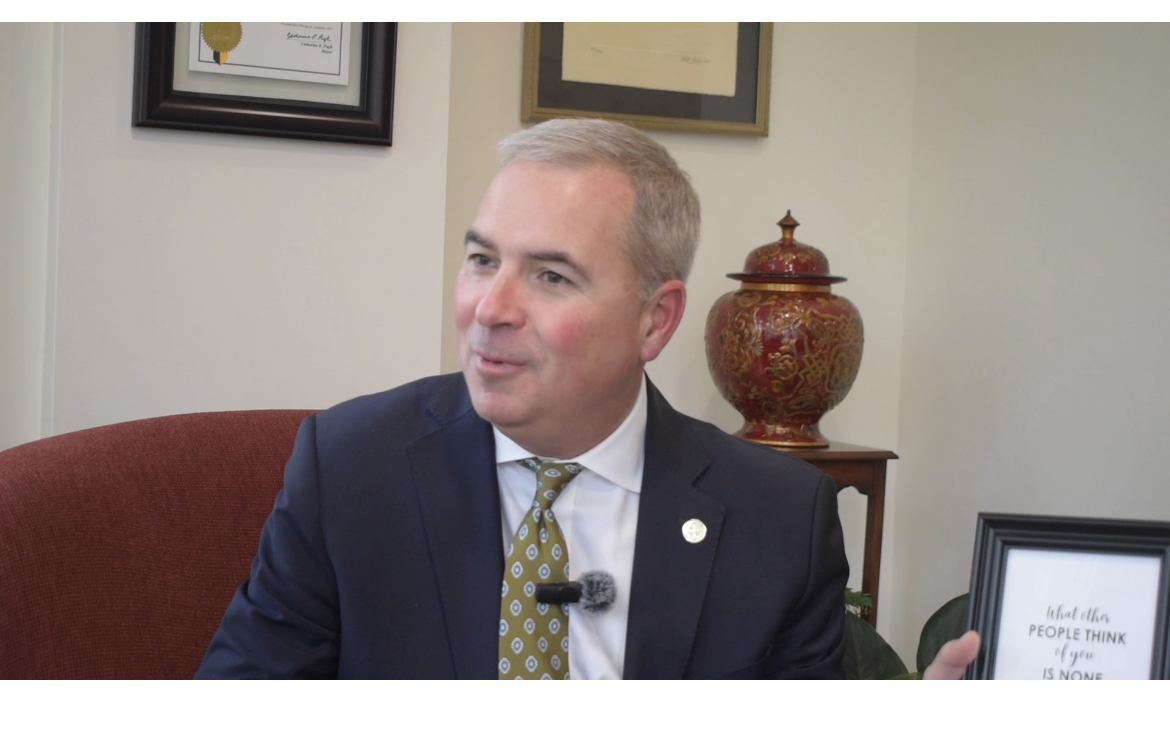
Dr. Joan Ricart-Huguet, a professor of political science, was concerned about the varying reactions to this act of political violence for several reasons.
“It is very unfortunate that some people would condone an assassination just because they disagree with someone’s viewpoints. It also worries me that a bunch of… people are weaponizing this assassination for political and instrumental reasons,” he said.
As political violence increases, we have become increasingly desensitized to it. The generational desensitization of violence and news warrants immediate responses. Both extreme and calm reactions are evident of this.
Sophia Graney ‘26 said she saw the full, uncensored video of Kirk being shot on social media on the day of his killing.
“Any sort of violence, no matter who it is, is devastating. It was sickening… I honestly felt really distraught afterwards. I don’t personally align with his views at all. I just felt really gross,” she said.
Graney then went on to describe that, despite seeing the shooting, it did not impede her ability to get through the rest of the day. This is because our generation has had a front row seat to tragedy since before our brains were mature.
Graney said she cannot recall the first violent acts she saw on social media, but she knows this was certainly not the first time it had been on her feed.
“Social media lets [violence] be so easily consumed now, and it is so easy to reach… I’m 21-years-old and I’m getting sickened by this; what 11-year-old is on social media and has unmonitored access being able to find this?,” she said.
In trying to reconcile the state of our country, I am hoping our generation can come together and realize that witnessing what we have all seen is not normal or ok. Take care of your brains, take breaks from social media, and look out for each other.
Media, News, and Misinformation:
The communication and political responses to this act of political violence raised some red flags for me. It is not just the response, but rather the response in comparison to recent acts of political violence.
President Trump issued an announcement from the Oval Office when Charlie Kirk was killed. In June, Minnesota State Representative Melissa Hortman and her husband were both assassinated by a gunman in their homes, and another legislator and her husband survived an attempted assassination. This political assassination should have set shockwaves throughout the country. Instead, President Trump said that addressing the tragedy with Minnesota Governor Tim Walz, Kamala Harris’ running mate in 2024, would “waste time.” No further action was taken by the president.
President Trump was questioned about this last week. He could not recall Representative Hortman’s name. He claimed he was not familiar with the matter.
When asked why he did not order flags to be lowered in June, the president rebuked. “Well, if the governor had asked me to do that, I would have done that…I wouldn’t have thought of that,” he said to a CBS News chief White House correspondent, Nancy Cordes.
A person being shot and killed for political reasons warrants a national response; it is concerning when a president only acknowledges the assassination of someone who supports their administration and beliefs, especially when the forgotten victim was the person attached to the government who just happened to be a member of the opposition party.
Dr. Ricart-Huguet said this is not just an issue coming from the administration.
“Kirk’s assassination has received more media coverage than Hortman’s in national outlets. That is unfortunate because it creates the impression that some deaths are more tragic than others,” he said.
The flow of information in the immediate aftermath is troublesome and not in the best interest of the United States. We are not immune to misinformation spreading like wildfire on social media, but this case was different. We had government officials, like President Trump and FBI Director Kash Patel, as primary sources of information, and more notably, misinformation.
Patel took it upon himself to announce information from his X account early in the investigation, which was later found to be incorrect. This is troublesome for the spread of information because his title deems prestige and accountability, but he was a primary source of misinformation. There is a complete lack of trust in the information coming from heads of state in our country; this is not normal for a strong, democratic society.
Final Reflections:
I abhorrently disagreed with just about every single opinion Charlie Kirk shared. I believe he was spreading a lot of hate and misinformation. I also think we could all take a look at the core of his act, engaging with people who have differing opinions, and try to practice that.
What we have going for us is simply not working. Social media has torn us apart. We never truly engage. We seem to have forgotten about moderation. Unity is lost. I am disappointed in myself sometimes. I am disappointed in my party. I am disappointed in my country in ways I have never felt before. Unity is in our nation’s name, and at this point, we do not deserve it.
My hope from the aftermath of his killing is that our generation at large realizes that we are at rock bottom and need to re-evaluate what humankind is doing. More than ever, we must collectively resist division. We can learn and move forward, but only together.