















































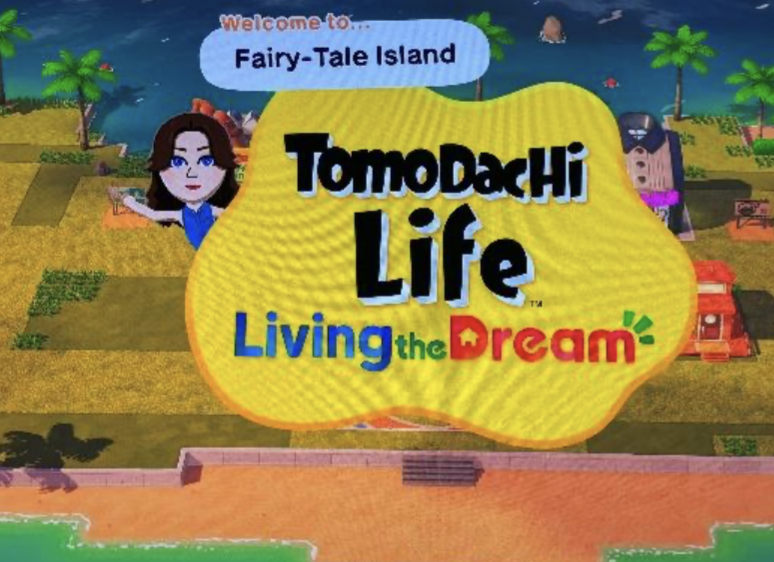














































On a small island filled with beaches, colorful apartment buildings, and quirky shops, players can watch their Mii avatars fall in love, argue, perform songs, make friends, and raise families.
I first started playing ‘Tomodachi Life’ on the Nintendo 3DS when I was 10 years old, drawn to how interactive and personal the game felt. Some of my favorite features were building relationships between the Miis, customizing their apartments and outfits, creating songs varying in genre in the music hall, and watching them get married and raise families.
I had three copies of the game, because I kept coming back to it and wanting more. This made the release of ‘Tomodachi Life: Living the Dream’ especially nostalgic for me.
Now, more than a decade later, this same game has now returned, reigniting interest in one of Nintendo’s most popular simulation games. Known for its offbeat humor and unpredictable gameplay, the franchise has maintained a loyal fanbase among many players, including myself.
As nostalgia continues to shape the gaming industry, the comeback of Tomodachi Life raises a larger question: Why does ‘Tomodachi Life’ still resonate so strongly with people today?
A part of what makes the game so unique compared to other life sim games is its randomness. This allows players to create characters that reflect their real lives, friendships, relationships, and individual identities. For many players including myself, the game serves as both a reminder of childhood, and a creative outlet that still feels relevant today.
Maddie Simpson ’29 pointed out that the uncertainty of the game is what keeps her hooked while playing.
“The unpredictability and the inherent unnaturalness of the characters is really entertaining to watch. The different situations that you can put these characters in is insane,” Simpson said.
Many students enjoy many of the new features that the new game has to offer, such as the option to add LGBTQ+ relationships. This feature allows players to customize their avatar to a whole new level to their preferences, and inclusivity within the characters.
Kate Havran ’29 enjoyed the new relationship elements which allow for a more inclusive and realistic experience within the game.
“I think that the inclusion of LGBTQ+ couple being included in the game is very important. I am really glad Nintendo has taken a step forward with it,” Havran said.
Another new tool in the game, that many love is the new face painting option. This tool allows you to customize your Miis to a whole new level in ways you can’t with the traditional mii maker.
Simpson has been using the tool frequently and was surprised by the versatility.
“The face painting actually exceeded my expectations. I thought it was going to be completely pixel and very restrictive, but it was the complete opposite of that,” she said.
This level of customization goes far beyond editing your avatar. In this game, you can customize your Miis’ apartments, create and purchase outfits and food, and shape each Mii’s personality.
Narek Sakessian ’28, who designed and programmed his own video game related to ‘Bigfoot’, explains how strong visual design can make the characters more memorable.
“Unique art styles really help characters and places stick to people. It’s very stylish when characters have their own distinguishable silhouettes from each other,” Sakessian said.
These new updates are what make the game feel like more than a nostalgic reboot rather than an original classic. This new version builds on a foundation by making the experience more inclusive for everyone.
While nostalgia plays a clear role in the game’s return, it also reflects a larger trend in how players return to games over time. Sakessian spoke about how consistently gameplay makes people want to return to games repeatedly.
“Permanent updates of people, they encourage people to come back after a while. People likely will come back to those games if they’re like a game from their childhood,” he said.
I think this is why ‘Tomodachi Life: Living the Dream’ works so well. It is not just relying on the past, but building on it such a way that keeps players engaged. The new features, like expanding customization and more inclusive relationships, makes the game feel updated, while still keeping the charm of the original game.
‘Tomodachi Life: Living the Dream’ succeeds not just because of nostalgia, but because it builds on what made the original game meaningful. With its unpredictability, expanded customization, and inclusive relationships, the game feels both familiar and new.