



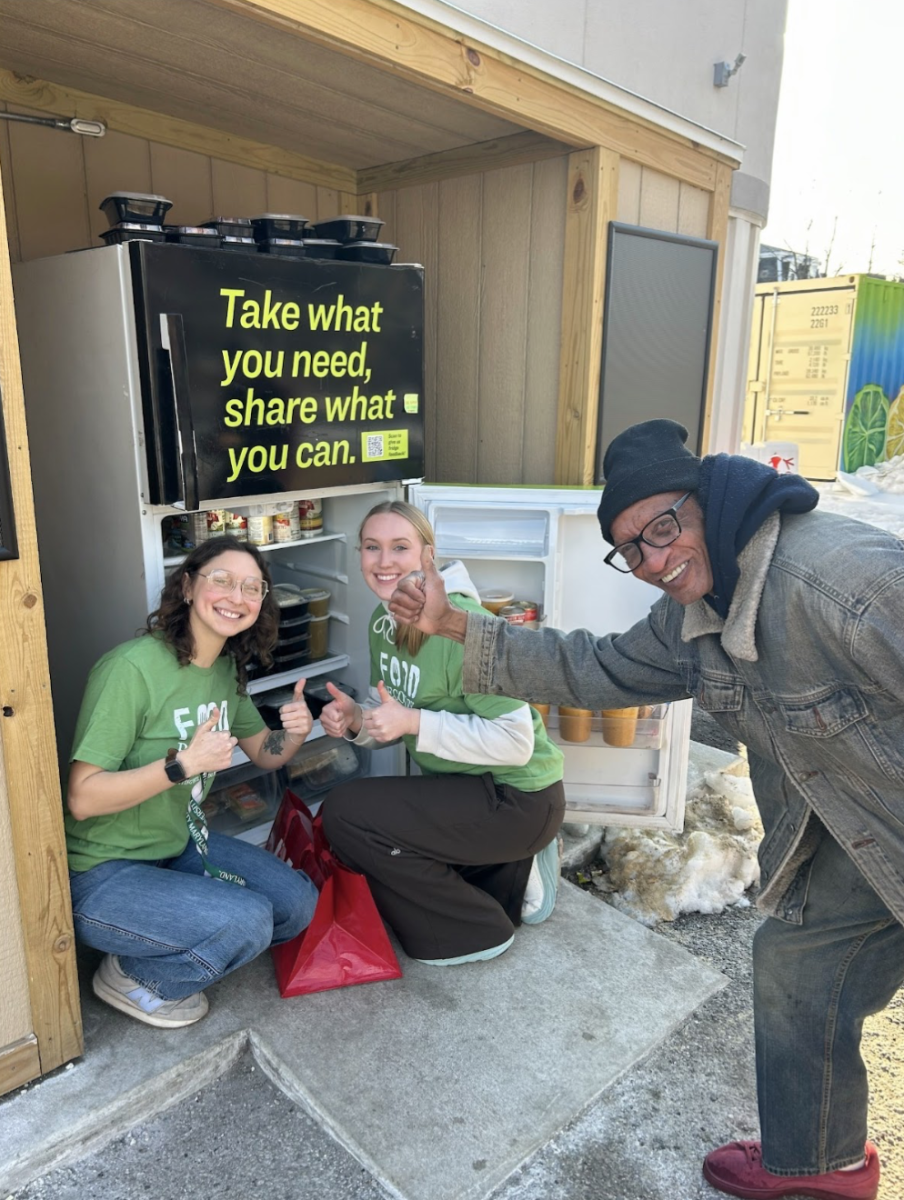





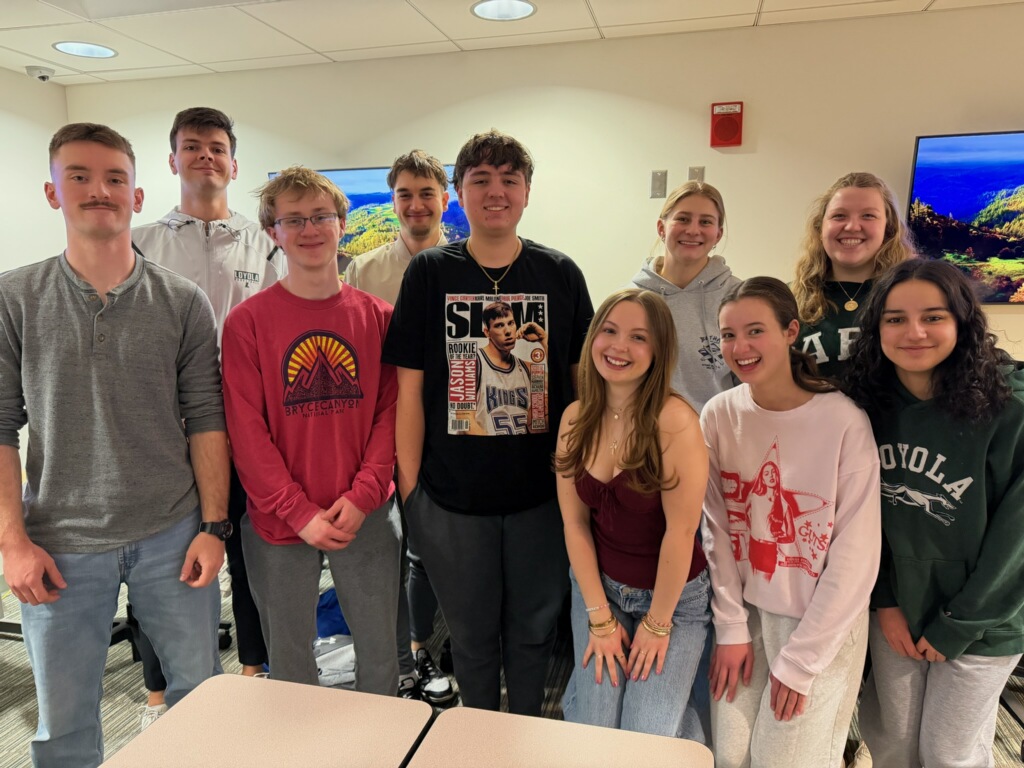












































With the fading of long-time Loyola partner Soul Kitchen, Loyola’s newest organization, Food Recovery Network (FRN), serves as a way for Loyola students to give back in a meaningful way that accomplishes the same goal: feeding those in need.
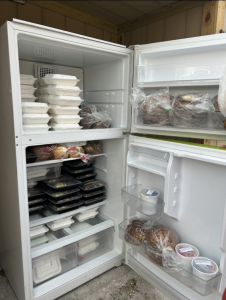
Every Thursday afternoon, students from the FRN gather food from several of Loyola’s dining facilities, including Boulder and Starbucks. The food is then packaged and taken to a community fridge located at 5104 York Rd. for the local Baltimore community.
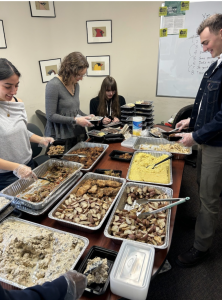
Food Access Coordinator and Public Relations/Social Media Manager for FRN Chloe Kovac ‘26 outlines an average FRN meeting. Around every Thursday from 3-5 p.m., students meet in the back side of Boulder, where dining facility workers are there with trays to give to the students. Students then travel either by personal vehicle or shuttle to the community fridge at 5104 York Rd., where they meal prep the food from the trays into plastic meal prep containers.
Kovac highlights that this club also accepts non-perishable foods, such as canned goods, that can be placed in cabinet space at the community fridge. She also notes that members of the Baltimore community arrive at the hut that houses the community fridge at their own convenience and are allowed to take as much as they need.
Kovac comments on the visible impact FRN has on the community.
“A crazy thing that I have noticed throughout this past year is that we’ll package over 100 meals in one day, and then I go check the fridge the next day, and it’s all gone. So it really just shows people in our community need this club,” Kovac said.
Kovac expands on this further, explaining that if there is anything that a local student can do, their help will not go unnoticed.
“At Loyola, we don’t really realize how much in need people are. If anyone has the ability to help them, they should use the Food Recovery Network just to help feed our community and help make food not go to waste, because we have so much leftover in the Boulder dining hall, ” Kovac said.
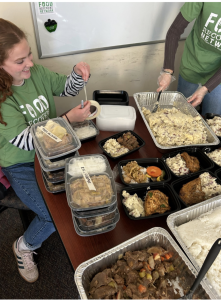
Such an innate sense of responsibility for the community is the heart of FRN. FRN volunteer Leela Kowalski ‘26 shares her sentiments and why she thinks this club is vital to the Baltimore community.
“I like working for FRN because I think the work is really important, especially in Baltimore, being a food desert. So many people do not have access to food … Sometimes members of the community come up to the fridge and take the meals. I mean, seeing the impact that we’re making is, I guess, why I do it. I see it with my own eyes, and I think that work is really important,” Kowalski said.
Kowalski emphasises the possible benefits this club can provide members outside of the club.
“I would say it’s good for resume building, if that is where it may entice some people … If you have a service learning oriented mind and heart, I think it will work perfectly for you. It’s also not super high commitment; it’s honestly really low commitment, and I think that’s perfect. It’s only a couple of hours a week,” Kowalski said.
Such a mission naturally comes with roadblocks that can halt the cause. Food Access Americorps VISTA for CCSJ Abigael Hartlieb explains the most pressing issue that FRN is currently experiencing: recruitment.
“I think, of course, being a new club, just for recruitment overall, and making sure schedules align with students … Sometimes, of course, you do have a class at that time. [It’s] understandable if you can’t make it. So we’re trying to find students who are able to attend,” Hartlieb said.
With the executive board of FRN being comprised of seniors, the search for future executive members is in full effect for the next academic school year. To learn more about the club, visit their Instagram page or look out for the club on The Bridge.
Sarah Abboreno Corbin • Mar 24, 2026 at 2:11 pm
Keep up the great work!
Javier Nolasco • Mar 23, 2026 at 9:17 pm
Wow very intriguing!