






























The following represents the opinion of the student reporter and does not represent the views of Loyola University Maryland, the Greyhound, or Loyola University’s Department of Communication.
Bad Bunny’s Super Bowl Halftime Show was one for the history books, making it the first time in the 60-year history of the NFL’s biggest game that the performance was done primarily in Spanish.
It was filled with elements from Puerto Rican culture; Bad Bunny opened on a stage representing Puerto Rico’s sugarcane fields with traditional jíbaro farmers wearing pava hats, referencing the island’s colonial history and plantation economy. The stage transformed into everyday island life and neighborhood scenes: coco frío and piragua stands, street-corner shops, people playing dominoes and getting their nails done.
“When Bad Bunny stepped onto the Super Bowl stage, he didn’t just go up on stage. He brought the entire culture up with him,” said Puerto Rican student, Malena Rivera ’26.
La Casita, a recreation of the set of Bad Bunny’s iconic residency in Puerto Rico at the Coliseum, served as a centerpiece of the halftime show. Around it, the music and movement put Puerto Rican rhythm front and center: reggaeton thumped across the field, dancers moved like they were at a neighborhood block party, and traditional Puerto Rican instruments filled the stage, creating a sound that echoed the island’s musical history.
During the show, Bad Bunny performed ‘El Apagón’, using power lines and sparks as a reference to the continuous blackouts that have affected Puerto Rico’s grid, a reminder of the island’s ongoing struggles after Hurricane Maria, when millions of people were left without power for months.
He briefly shared the stage with Ricky Martin, an important figure in Latin music whose success helped open doors for Latin artists in the United States. The appearance tied the halftime show to decades of Puerto Rican impact on global music and showed how far that influence has come.
The historic set transformed one of the most-watched television events into a broader cultural moment, featuring Latin music and centering on the theme of identity. Considering the political climate we currently live in, where debates over immigration, language, and national identity are recurring, the performance was especially timely. For many Puerto Ricans and Hispanics, it was more than just a show, it was a statement about visibility, pride and belonging.
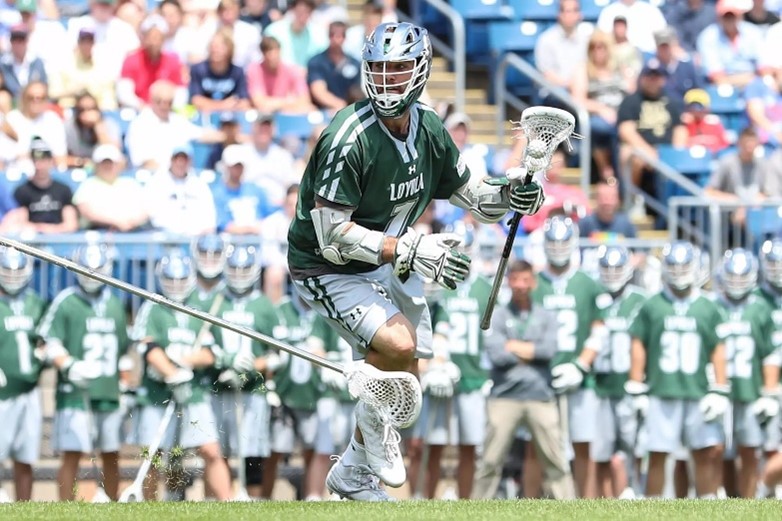
At Loyola University Maryland, this performance resonated deeply among Puerto Rican students and faculty, prompting reflection and celebration.
“I enjoyed seeing such a familiar face at one of the biggest U.S. events, one deeply connected to my childhood, my people and my development. His message is, and will continue to be, one of inherent human value beyond race or identity,” said another Puerto Rican student, Ricardo Santiago ’27.
Yet the message extended beyond Puerto Rico alone. As flags representing countries across North, Central and South America appeared, the stage became a visual message of shared histories and cultural ties throughout the continent. A reminder that America is the whole continent, not just the United States. Surprise collaborations, including an appearance by Lady Gaga, further emphasized unity across languages, races and national backgrounds, reinforcing a performance that many viewers interpreted not just as a celebration, but as solidarity.
“I stand tall and proud in saying that Benito (Bad Bunny) represents my ideals. Not only as a Boricua, but as a human being,” said Santiago.
Dr. Paola Pascual-Ferrá, a Puerto Rican and communications and media professor, shared her love and excitement about the performance.
She said, ‘The only thing more powerful than hate is love.’ ¡Gracias Benito!”
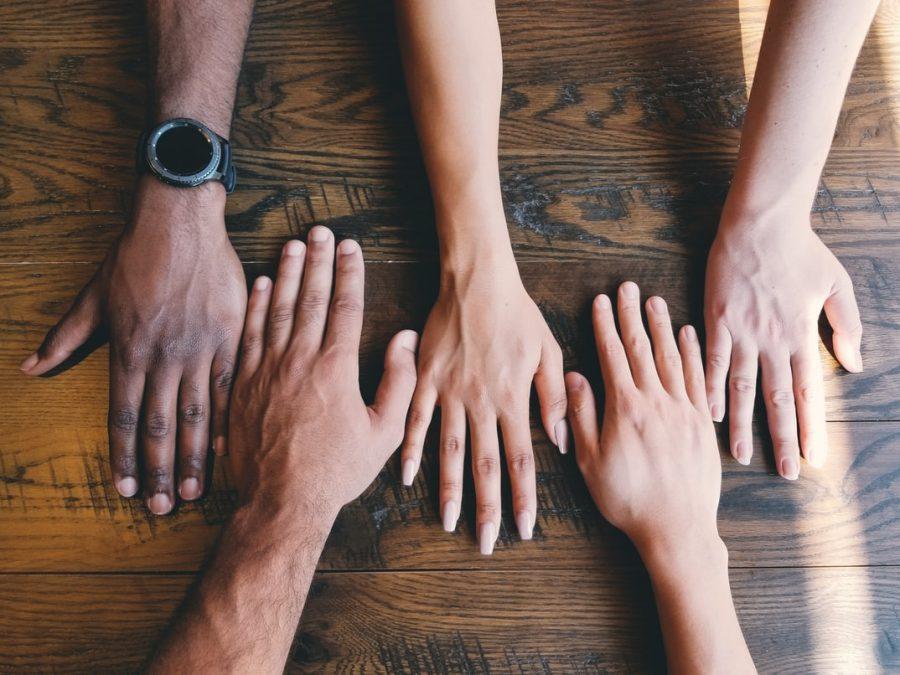
Bad Bunny ended his set lifting a football stamped with ‘Together we are America’ and standing beside a sign that read ‘The only thing more powerful than hate is love’. That final image was a message not just for Puerto Ricans or Hispanics, but for everyone watching: Black, Indigenous, Asian, White, Multiracial, Immigrants and Native-born alike.
In a political climate often shaped by division and arguments over who belongs, Bad Bunny chose to end with a call for unity. His performance reminded viewers that love is not weakness. It is choosing to stand together, to protect each other’s cultures and to make space for every story. Art itself is a form of resistance, and in that moment, the performance became more than entertainment. It became a statement that hate does not get the final word, love does.