
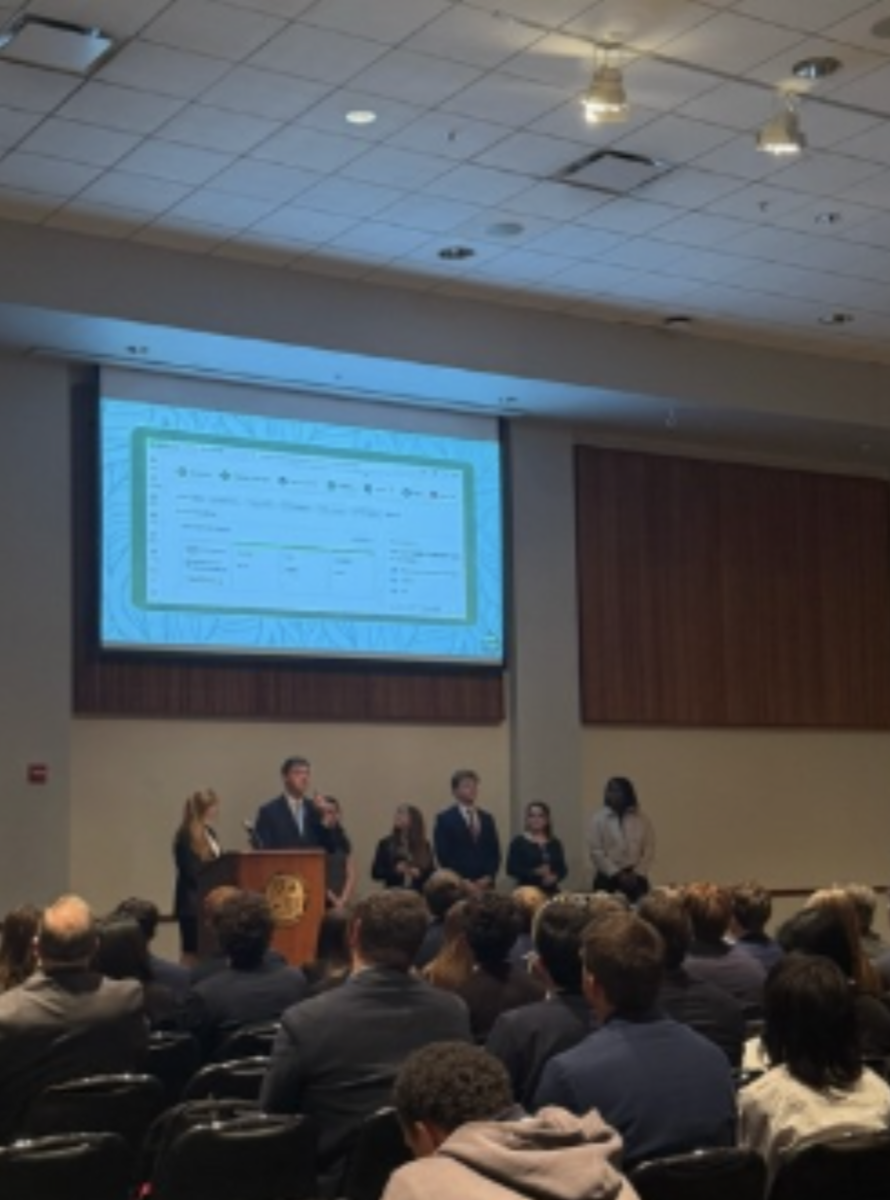

























































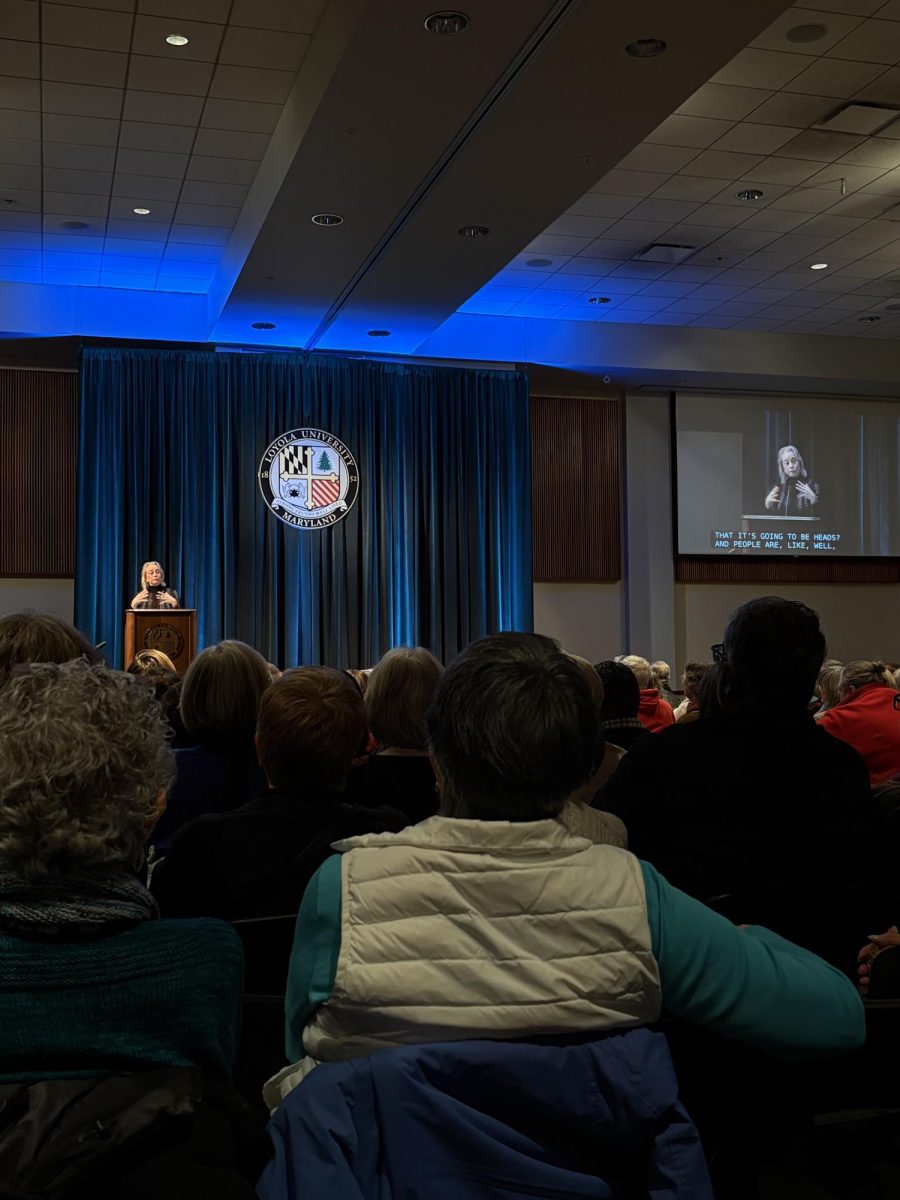
This year’s annual Cleophas Lecture featured Baltimore hometown novelist Laura Lippman. With over 20 crime fiction novels including ‘Lady In The Lake’, which has been adapted into a television series, Lippman’s talk carried a central concept of not narrowing life through narratives.
Lippman has resided in Baltimore for over 25 years. She is a New York Times Best Seller and has won several awards for crime writings since publication of her first novel in 1997. Lippman said she feels that women often need the mask of genre to feel entitled to write, as opposed to male writers.
“I met a very influential woman in my career…She said she felt in our culture men were really comfortable sitting down saying, ‘I’m going to write the Great American novel.’ But women were hesitant unless they said, ‘Well, I’m just gonna write a mystery, a romance.’ And so, that really stuck with me, but the fact is, I love crime fiction,” Lippman said.
Lippman said she decided to be a novelist at age five. But, she was disliked by her early boss at the Baltimore Sun for her writing skills, yet this only inspired her to follow her earlier dreams.
“He told me I wasn’t a very good writer. Which I didn’t think was fair, but I also understood that when someone is your boss, their opinion of you carries a lot of weight. But if I could write a book and sell it and publish it, then a lot more people get to decide whether I’m a good writer. So that’s how it got started. I just decided to write a book to see if I could change this narrative of not being a good writer,” Lippman said.
Lippman continues to pursue her passion of novel writing and goes against the set cultural expectations of women in this field. She describes how she has always had a passion for crime novels and she intuitively knew how to do it.
“I don’t think being a genre writer means you can’t be a great literary writer…I started off because it’s like, I love this. And I had read so much of it that I knew how to do it without knowing how I knew how to do it,” Lippman said.
Leading into her main message of the lecture, Lippman encouraged students and audience members that narratives help understand life, but life should not be lived as if it were a narrative.
“Even though I’ve built my life around narrative, even though I’ve built my life around stories, and even though it’s very human for us to try to turn our life into stories, I think the real challenge is to live your life as if it’s not a narrative, because narratives get smaller at the end,” Lippman said.
University of Maryland College Park Alumna Nora Zuccaro, who attended the lecture, is a fan of Lippman’s novels.
“I really enjoyed her intro about how you shouldn’t really look at your life in narrative pieces, how that is really doing yourself a disservice, and how being open to more opportunities is really more expansive for your life, not really just in your writing, but in your personal life,” Zuccaro said.
Zuccaro cherishes Lippman’s stories and she has read many in the past with her favorite being ‘Lady In The Lake’. Zuccaro points out that Baltimore’s fun side is not commonly represented in novels, and she said she appreciates the way Lippman writes about Baltimore in comparison to other works such as ‘The Wire’. Zuccaro said it is rewarding to read something that has a lot of charm.
Lippman thoroughly emphasizes how proud she is to be a Baltimore native, and she believes that place is essential as a writer.
“I think Baltimore is a great, interesting, challenging, idiosyncratic place to write about… You know, I live in South Baltimore…Baltimore feeds my imagination. I just think it’s an interesting place, and I love it. I want to share that love with people,” Lippman said.
Lippman concluded by encouraging the audience not to limit themselves to a three-point plot, but instead look to the future as a way of opening your life, because that is what has worked best for her.
“Everything I thought I knew about my life didn’t turn out the way I thought. A lot of it was much better. Some of it was worse. Some of it was just different. And I make up stories for a living. But when I tried to make up the story of my own life, I got it wrong,” Lippman said.